

Burnout rarely happens overnight. In this interview, Lekkerland colleague Linda Lange talks about her own experience of burnout, the warning signs and the long journey back to greater energy and a zest for life – and how she is staying on that path in the long term. She also explains how colleagues and senior managers can support those affected.
Constant exhaustion, a lack of zest for life, increasing irritability: the warning signs of burnout had long been present in Linda Lange’s life. Yet, as with many who suffer from it, they crept into her everyday life over the course of years and therefore went unrecognised for a long time.
In this interview, our colleague at Lekkerland looks back candidly on her own experience of burnout. She explains why it was so difficult to admit to herself how she was feeling, what moment finally marked a turning point, and what helped her on her road to recovery. She also discusses the role that beliefs and personal patterns played in this, and how she looks after her mental health today.
She also offers insights into how colleagues and senior managers can support those affected, why an open conversation is often the first step, and why responsibility for one’s own health cannot, however, lie entirely with others.
The World Health Organisation (WHO) describes burnout as a syndrome caused by chronic stress in the workplace that is not successfully managed. Burnout is not a disease in its own right, but a work-related phenomenon. The term is used exclusively in a professional context.
Typical characteristics include:
- severe exhaustion,
- an increasing sense of detachment from work,
- a feeling of reduced professional effectiveness.
It is not possible to determine exactly how many people are affected. In 2023, the AOK recorded around 186,000 employees on sick leave due to burnout. At the same time, in 2020, around one in four people in employment reported experiencing psychological stress at work.
Sources: WHO, AOK, Federal Statistical Office
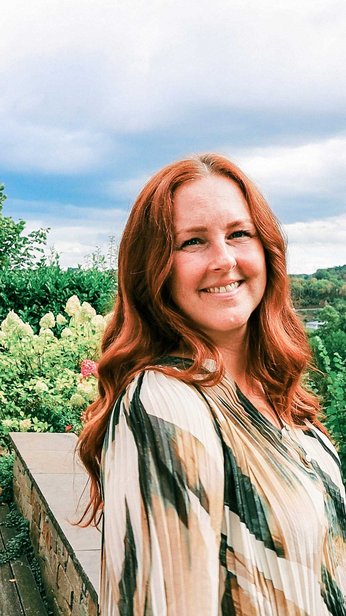 Linda Lange is Manager of People Compensation & Benefits at Lekkerland and a systemic coach. | Photo: private collection
one: Linda, you suffered from burnout about five years ago. What were the signs?
Linda Lange is Manager of People Compensation & Benefits at Lekkerland and a systemic coach. | Photo: private collection
one: Linda, you suffered from burnout about five years ago. What were the signs?
Linda Lange: I was constantly exhausted. Even after eight or nine hours’ sleep, I didn’t feel rested. As my exhaustion grew, so did my loss of zest for life. I found it hard to switch off and was easily irritable.
one: Why was it so difficult to recognise these warning signs early on?
Linda Lange: Burnout develops over years, sometimes even decades. The creeping exhaustion and the increasingly rapid irritability eventually became part of my normal life. That’s the problem for many people affected: they no longer recognise the signs as such because they’ve become part of everyday life. You get used to no longer finding joy in anything.
In my case, there was an added factor: I did all my work remotely for my company at the time; my boss was based in the US. This meant I was able to hide my situation from myself and others for longer.
one: So burnout ‘creeps up’ on you. And once it’s reached that stage, aren’t even preventative measures of any help?
Linda Lange: Advice and suggestions such as ‘Take a break, say no to overtime, go for a walk in the woods’ are well-intentioned and certainly help, up to a point, to stop you from slipping any further. But once you’re in the thick of burnout, they no longer work. Then you need something else.
„Over time, you get used to not finding joy in anything anymore.“ Linda Lange
one: So what does it take?
Linda Lange: The realisation that you a) are suffering from burnout and b) need to accept that you should seek help and make some changes. Walks in the woods don’t help at that stage. Back then, when I was given advice like that, it actually tended to annoy me.
one: Was there a moment when it dawned on you: ‘I’m suffering from burnout’?
Linda Lange: The word had certainly been floating round in my head for some time. The real lightbulb moment came when my husband said: ‘Linda, you’re suffering from burnout. You can’t carry on like this.’ It was one of those days when I was crying into my computer in frustration because something wasn’t working. That’s also a sign of burnout: small problems suddenly become huge ones.
When I was sitting in the doctor’s surgery, all I could do was cry. I’d accepted that something wasn’t right. And that acceptance was the first step on the road to recovery.
one: Why is it so difficult to accept that you’re suffering from burnout?
Linda Lange: For me personally, it was fear. What does this mean for me? Who am I with burnout? And what does it mean for my future? Each of us has a self-image. I was a career-driven person, held a management position; my job was my number one priority in life. I wanted recognition. Admitting to myself that I was no longer functioning as usual frightened me. Fear of the uncertainty: what happens if I accept my condition? So I ignored it and tried to carry on.
one: Why was this acceptance so important?
Linda Lange: It’s the crux of the matter. It helped me to look at my life from the outside and admit to myself: I can’t carry on like this. Something has to change.
one: What did you do from that moment onwards?
Linda Lange: It’s certainly different for everyone affected. For me, it was like this: I was on sick leave for a total of six weeks. For the first two weeks, I was at home doing nothing, until I realised: this isn’t changing anything.
So I booked myself into a hotel outside Cologne for a week. By that point, I’d already completed a coaching course and had been exploring meditation. I was on my own, meditating, reflecting and taking a close look at my own patterns. In the process, I gained a lot of insights and questioned the beliefs that had shaped me.
When I returned to work after six weeks, I had changed. I had more energy and joy again – and, above all, I knew how to look after myself better in future.
one: What support helped you along the way?
Linda Lange: For me, it was the right thing to tackle this on my own. It might help others to explore, with guidance, which beliefs and habits led to their burnout. Therapy is one option. Here at the REWE Group, we offer services such as MyMentalHealthCoach (see info box). Coaching is also helpful.
My tip: Seek support and identify which beliefs led you to burnout. In my view, that’s the way out.
one: What role do these beliefs play?
Linda Lange: A huge role. It’s not about blame, but about the patterns that have shaped us. For me, for example, these were beliefs such as: ‘I have to work harder to achieve more.’ ‘I have to please everyone.’ I’m responsible for a harmonious working atmosphere. So I take on more tasks than I can handle.
Of course, the work itself and the environment also play a part. But if you understand your own patterns better, you can learn to react to them differently. And that’s why resigning isn’t automatically the solution. After all, you always take yourself with you, even into your next job.
„Admitting to myself that I was no longer functioning as I usually did frightened me. “ Linda Lange
one: How can colleagues and senior managers help?
Linda Lange: By noticingchanges . And addressing them. The conversation should take place in private in a calm setting, not in the midst of a stressful situation. It’s not about saying: ‘I think you’re suffering from burnout; you should do something about it.’ It’s far more important to show interest and strike up a conversation.
And don’t expect a single conversation to change anything straight away. It often takes time, patience and several attempts. The key thing is for the person affected to feel: ‘We’re here to support you.’ Being open about it has no negative consequences.
one: Why is that so important?
Linda Lange: Because otherwise, existential fears can quickly set in. If people fear that being open will jeopardise their career or their job, it becomes even harder to accept help.
one: Could your senior manager have done things differently back then?
Linda Lange: In my situation back then, probably not much. Today, at Lekkerland, I work differently. I’m in the office regularly, have a relationship of trust with my line manager and could openly discuss any changes. Conversely, she’d probably also notice if I wasn’t feeling well.
However: Senior managers can offer support. They cannot prevent burnout. I see this as clearly my own responsibility.
one: How do you ensure today that you don’t suffer from burnout again?
Linda Lange: Self-reflection is key. I recognise my warning signs much better now. I regularly ask myself: Am I still enjoying my life? Have I experienced moments in recent weeks that have brought me joy? And did I actually feel that joy? If I notice that listlessness or exhaustion is increasing, I take a closer look and ask myself what’s behind it. Then I have my own ways of dealing with it.
For me, journaling and meditation are important tools – in other words, keeping a diary, finding a moment of stillness and consciously setting aside time for reflection. Others develop their own methods with the help of a coach.
„Saying you’re leaving isn’t always the answer. After all, you’re always taking yourself with you.“ Linda Lange
one: How safe are you from suffering another bout of burnout?
Linda Lange: Whether you’re prone to burnout has mainly to do with your own personality. Anyone who’s ever had burnout knows that you have to stay alert so that you can recognise the warning signs early on and take action to prevent it.
I haven’t changed my personality, but I have changed the way I look after myself. Because the state my life was in back then was terrible. That’s why I look after myself and my life better these days.
Under the umbrella term MENTAL HEALTH@REWE Group, you will find all the services through which the REWE Group aims to support the mental health of its staff. These services include confidential peer-to-peer support provided by LoS! peer support workers, assistance from the company’s addiction counsellors, psychosocial counselling from qualified psychologists, and referrals to suitable therapy (Mein MentalHealthCoach).
All REWE Group mental health services can be found:
- on your business unit’s intranet (e.g. in ‘inside’ under ‘Health and Social Affairs’, Lekkerland MoverNet, DERTOUR CoCo)
- in your staff app (REWE, PENNY, toom)
- or in Orange or PENNYPedia (REWE, PENNY)
- as well as in this video
- Workplace Health Promotion Austria: Health promotion
Please note: Mental health support services may vary depending on the business unit. You should therefore find out about the services, points of contact and terms and conditions applicable to your business unit.


Both German and English comments appear here.
Sehr wichtiges Thema.
Stark das öffentlich mit uns zu teilen. Vielen Dank dafür.
Ich selber durfte auch schon zweimal diese Erfahrung machen - bei mir primär durch die falsche Annahme das positiver / konstruktiver Stress auf die Dauer nicht auch zu viel werden kann (und weil ich für 4 gearbeitet habe :P )
Achtet auf Euch und erkennt frühzeitig die Warnsignale. Egal wie wichtig vermeintlich euer Tun ist, ein Komplettausfall (beruflich UND privat) über Wochen, Monate oder sogar Jahre ist es nicht wert!