

The mental health of its employees is an issue that REWE Group actively addresses - for example with the help of the LoS! multipliers. This is a network of specially trained employees who support colleagues in difficult phases of their lives. Four of them show here how important openness, prevention and a clear attitude on the part of senior managers are for healthy cooperation.
What to do when life gets out of balance? Whether due to family stress or personal crises - psychological challenges affect many people, and their effects do not stop at the workplace. REWE Group addresses this sensitive issue with a wide range of prevention programmes - and with LoS! - Life-phase-oriented self-help skills, a network of employees who have been trained to support their colleagues.
To date, around 300 colleagues throughout the company have been trained as LoS! multipliers to support other employees in difficult phases of their lives. They listen, provide guidance, point out ways forward and pass on helpful addresses - especially when employees are mentally burdened by challenging events.
We asked four of them how they help, what mental health means to them and why prevention, openness and sensitising senior managers are so important. Their stories show: Mental health is teamwork - and not a taboo at our company, but an issue that is being addressed.
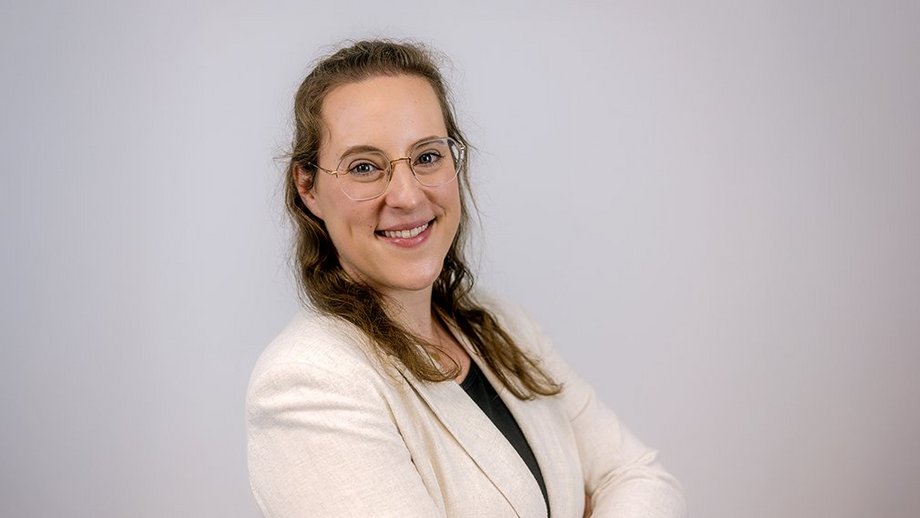 Corinna Spies is HR officer for occupational health management and for the compatibility of job, family and private life at REWE Markt GmbH Region West. Photo: ©Justine Heller
"For me, mental health means being resilient enough to get through difficult times and to keep an eye on the positive.in my dual role as a LoS! multiplier and a consultant for occupational health management (OHM), I enjoy communicating the specific mental health support programmes that REWE offers its employees. Having a sympathetic ear often helps many people seeking dialogue. Asking people about their own resources helps them to think about what coping strategies they already have in place that can help them through mentally challenging times.
Corinna Spies is HR officer for occupational health management and for the compatibility of job, family and private life at REWE Markt GmbH Region West. Photo: ©Justine Heller
"For me, mental health means being resilient enough to get through difficult times and to keep an eye on the positive.in my dual role as a LoS! multiplier and a consultant for occupational health management (OHM), I enjoy communicating the specific mental health support programmes that REWE offers its employees. Having a sympathetic ear often helps many people seeking dialogue. Asking people about their own resources helps them to think about what coping strategies they already have in place that can help them through mentally challenging times.
Psychological causes are now in third place behind respiratory diseases and musculoskeletal disorders as reasons for incapacity to work. Employers are naturally aware of this and have a keen interest in addressing this issue. Through various offers in the field of mental health, lectures in management circles, discussions with colleagues and awareness weeks, we BGM consultants are trying to remove the taboo from the topic.everyone should feel free to talk about mental health - because the topic affects us all in some way.
Senior managers are a great gateway to openly discussing mental health. The better they know about their own mental health, the better they can bring the topic into the circle of their employees. To achieve this, the topic needs to be placed in the senior managers' academy, at regional meetings, at management events, in works council committees and with HR partners.the broader the communication, the more effective."
 Sven Kronenberger is HR Officer at FÜR SIE Handelsgenossenschaft eG Photo: ©FÜR SIE eG Rainer Holz
"For me, mental health means closing my laptop and really winding down so that the evening has room for enjoyable experiences and the night remains calm. Mental health keeps my private and professional life in balance and is at least as important as physical health, especially because mental health diagnoses are one of the most common drivers of long absences and every team feels when someone is absent.
Sven Kronenberger is HR Officer at FÜR SIE Handelsgenossenschaft eG Photo: ©FÜR SIE eG Rainer Holz
"For me, mental health means closing my laptop and really winding down so that the evening has room for enjoyable experiences and the night remains calm. Mental health keeps my private and professional life in balance and is at least as important as physical health, especially because mental health diagnoses are one of the most common drivers of long absences and every team feels when someone is absent.
How can I, as a LoS! multiplier, support my colleagues here? By pointing out ways and taking the first steps together so that the hurdle becomes smaller and help remains tangible. Generally promoting the topic, breaking down prejudices and sharing clear information so that uncertainty turns into trust and no one is left alone. Actively support campaigns such as "MentalHealth@REWE Group - Together for more well-being" and communicate them to the teams, for example via short check-ins, notices and intranet information, so that offers become visible and are actually used.
It is important to understand: Depression and anxiety disorders are not visible like an arm in a cast; they manifest themselves in lapses in concentration, sleep disorders and a lack of drive. To turn good intentions into a lived routine, mental health in the office needs a clear structure that provides orientation and visibly supports existing measures and campaigns."
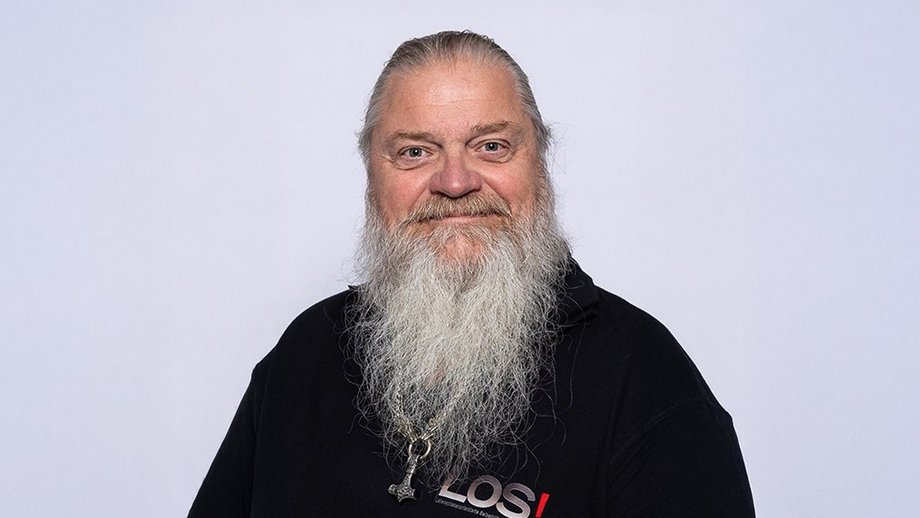 Wolfgang Albrecht, Commercial Coordinator (Operative Software Buyer) at REWE digital, works council REWE West 2, and LoS multiplier Photo: ©Michael Breuer
"For me, mental health starts with self-care, mindfulness and the ability to say no clearly from time to time. In my role as a LoS! multiplier, I try to set an example of exactly that - for myself and for those around me. The world of work is becoming increasingly hectic and pressurised, and I'm seeing a significant increase in mental illness in discussions about company integration management (BEM). This makes it all the more important to have an open ear for colleagues, to have conversations, to listen and to provide food for thought. LoS! makes a real difference here: it creates a confidential space in which concerns can be expressed - without judgement.
Wolfgang Albrecht, Commercial Coordinator (Operative Software Buyer) at REWE digital, works council REWE West 2, and LoS multiplier Photo: ©Michael Breuer
"For me, mental health starts with self-care, mindfulness and the ability to say no clearly from time to time. In my role as a LoS! multiplier, I try to set an example of exactly that - for myself and for those around me. The world of work is becoming increasingly hectic and pressurised, and I'm seeing a significant increase in mental illness in discussions about company integration management (BEM). This makes it all the more important to have an open ear for colleagues, to have conversations, to listen and to provide food for thought. LoS! makes a real difference here: it creates a confidential space in which concerns can be expressed - without judgement.
In order for mental health to become more firmly anchored in everyday working life, we need more education, training and, above all, a clear attitude at management level. My wish is that we at REWE Group deal with the topic even more openly, create more transparency and recognise that mental stress is increasing. This is the only way we can jointly establish a culture in which mental health is taken into account as a matter of course."
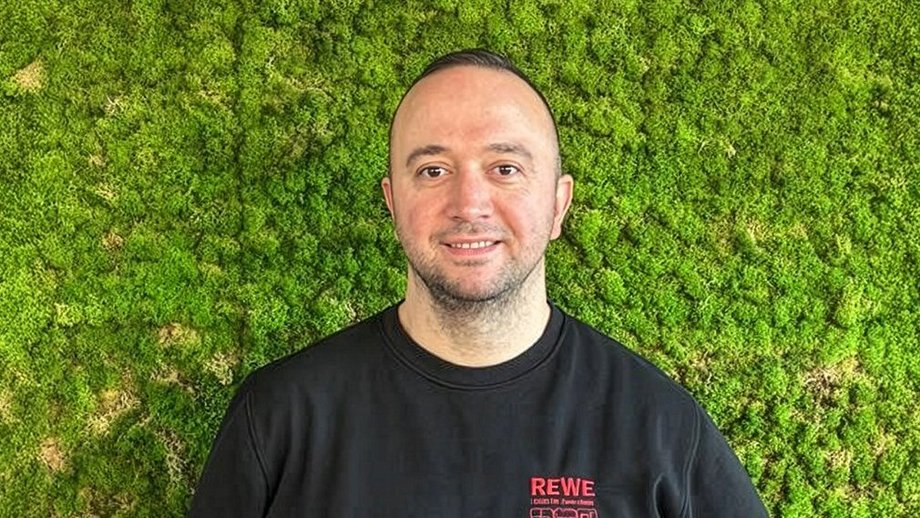 Kasim Özaydin, Logistics Team Leader responsible for HACCP and incoming goods at the REWE logistics centre in Neu-Isenburg.photo: ©Tom Gloos
"I think we as LoS! multipliers can achieve a lot, especially by listening and trusting. It often helps just to have someone there who simply has time and doesn't judge. I can use the LoS! support to provide guidance, consider possible next steps together with the person and - if necessary - refer them to professional help. It is important to me that the person concerned feels that they are being taken seriously and knows that they are not alone. I've already had a few conversations with colleagues who were under psychological strain - e.g. due to caring responsibilities, financial worries or personal crises. I have been able to support them by listening, showing understanding and pointing out where they can find further help. Sometimes it's enough for someone to realise: 'There's someone who understands me and takes me seriously It used to be a taboo subject, but now people talk about it much more openly. I notice that both colleagues and senior managers react more sensitively when someone is overloaded. There is also more support from the company - for example, by providing information or internal networks. I think it's important that the topic remains permanently present - through workshops, open discussion groups or brief impulses in everyday life."
Kasim Özaydin, Logistics Team Leader responsible for HACCP and incoming goods at the REWE logistics centre in Neu-Isenburg.photo: ©Tom Gloos
"I think we as LoS! multipliers can achieve a lot, especially by listening and trusting. It often helps just to have someone there who simply has time and doesn't judge. I can use the LoS! support to provide guidance, consider possible next steps together with the person and - if necessary - refer them to professional help. It is important to me that the person concerned feels that they are being taken seriously and knows that they are not alone. I've already had a few conversations with colleagues who were under psychological strain - e.g. due to caring responsibilities, financial worries or personal crises. I have been able to support them by listening, showing understanding and pointing out where they can find further help. Sometimes it's enough for someone to realise: 'There's someone who understands me and takes me seriously It used to be a taboo subject, but now people talk about it much more openly. I notice that both colleagues and senior managers react more sensitively when someone is overloaded. There is also more support from the company - for example, by providing information or internal networks. I think it's important that the topic remains permanently present - through workshops, open discussion groups or brief impulses in everyday life."
Whether it's divorce, debt, a serious illness, the loss of a loved one, a family member in need of care or other private worries: personal problems can be many and varied and can also have a significant impact on working life. With LoS!, REWE Group aims to provide employees with quick and practical support in critical life situations.
LoS! stands for "Life-phase orientated self-help competence". Behind the title lies concrete support from colleagues. To this end, employees and works councils are trained as so-called LoS! Multipliers and trained to provide practical help in the crisis phases of life. This enables them to offer their colleagues help and advice or simply lend a sympathetic ear.
Practicality and easy access for those affected are particularly important. As peer counsellors, the LoS! multipliers show what measures are possible in the face of impending financial misery or how to apply for a care degree for relatives in need of care. He/she does not relieve the affected employee of the need to go to debt counselling or the care insurance fund, but does point out supportive solutions and rays of hope.
So far, around 300 employees and works councils have been trained as LoS! Multipliers, whose work is a great support for their colleagues.
You can find all the ambassadors on the intranet.


