

Sleep is the best medicine, as the saying goes. We spend around a third of our lives asleep. But why is a good night's sleep so important and how can we get to grips with sleep problems? With a few simple tricks, we can slumber more soundly again - not least thanks to the current REWE Group sleep challenge.
The alarm clock rings, your head is heavy, your eyes fall shut again - although the night was actually long enough, you feel like you're exhausted. Many people are familiar with this feeling, but hardly anyone thinks about what actually happens during sleep. Yet it is much more than just a rest: while we sleep, a highly complex repair programme takes place in our body. However, if our sleep is permanently disturbed, there is not only a risk of tiredness and concentration problems, but also potentially serious health consequences.
Sleep - your repair and cleaning service
It sounds paradoxical: while we slumber peacefully on the outside, our body is working at full speed. In the deep sleep phases, pulse, blood pressure and body temperature drop and the muscles are relaxed - the entire organism switches to regeneration. Cells are renewed and damaged tissue is repaired. Growth hormones promote the recovery of muscles and bones. Night-time rest is also important for the immune system in order to form defence cells and fight pathogens. Metabolic residues that accumulate during the day are removed from the brain and the impressions and information gathered during the day are processed. In this way, a good night's sleep creates the basis for energy, concentration and balance during the day.
Medicine for body, mind and soul
If night-time sleep is disturbed for a long time, this has serious consequences: The body's nightly regeneration processes no longer function, resulting in a weakened immune system. We are sick more often and less productive. Insufficient sleep is also associated with many chronic health problems. Conversely, this means that Undisturbed bed rest reduces the risk of heart and kidney disease, high blood pressure, diabetes, strokes and obesity.
Poor sleep also has an impact on our mental health. Constant restless nights affect our emotional stability and resilience, leading to irritability, mood swings and concentration problems. In the worst cases, this can lead to depression, anxiety disorders or burnout - which in turn can contribute to sleep disorders. A vicious circle.
Men sleep differently. So do women.
Sleep is always individual, but some gender-specific differences can be identified: On average, women sleep slightly longer than men, but suffer more frequently from sleep disorders - especially during hormonal upheaval phases such as menstrual cycles, pregnancy or menopause. Men, on the other hand, are more prone to "snoring-related" breathing interruptions (sleep apnoea) and tend to go to bed more irregularly.
Better sleep made easy
We can help ourselves to get healthy and healthy sleep. Seven to eight hours a night is considered optimal for adults. Fresh air and exercise during the day and a regular sleep-wake cycle help here. Relaxing evening rituals such as reading, going for a walk or taking a warm bath support the transition to the rest phase. Bright screen light, heavy meals and caffeine should be avoided as far as possible in the evening, and alcohol is also a disturber of rest. A quiet, dark, well-ventilated sleeping environment makes it easier to mentally "switch off". Herbal aids in the form of teas, capsules or essential oils can also contribute to relaxation and well-being, such as lavender, hops, camomile, lemon balm and valerian. Sleeping pills should only be taken over a longer period of time after consulting a doctor!
Our sleep at night takes place in several cycles, which are repeated after we fall asleep.
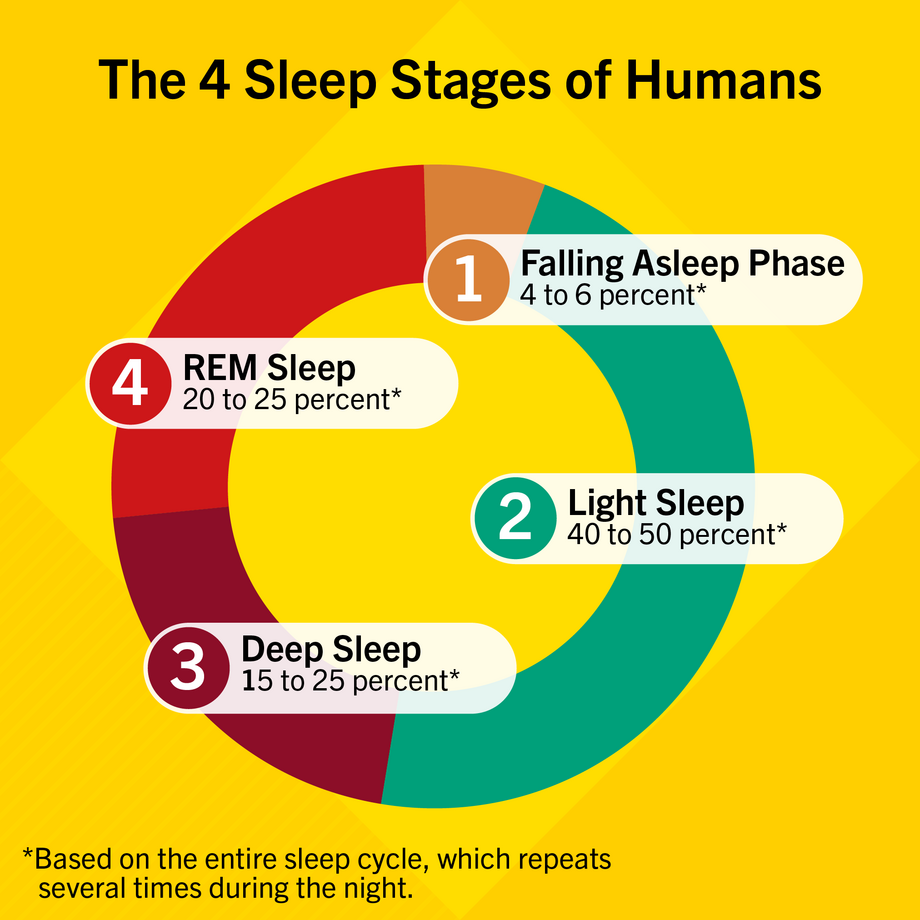 One cycle lasts around 90 minutes and begins with light sleep: the muscles relax and breathing becomes calmer. This phase serves as a transition between wakefulness and deep sleep. Deep sleep comprises around 20 to 25 per cent of our night's rest and is the most restorative. Finally comes the REM phase ("Rapid Eye Movement"), in which we dream vividly. This phase is strongest towards the morning, which is why we can often remember our dreams.
When we go to bed is inherited, but usually changes over the course of our lives. If you look at the natural sleep rhythm - regardless of obligations such as work or school - there are three different types:
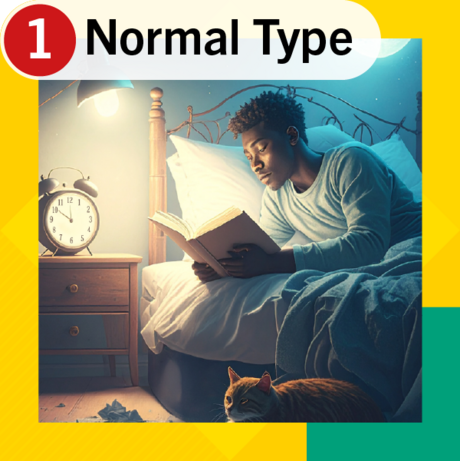 The normal type prefers to go to bed at midnight and get up around 8 o'clock in the morning. This sleep type is the most common.
 The lark is wide awake and full of beans in the early morning and quickly becomes tired in the evening. Children are usually categorised as larks, as are older people.
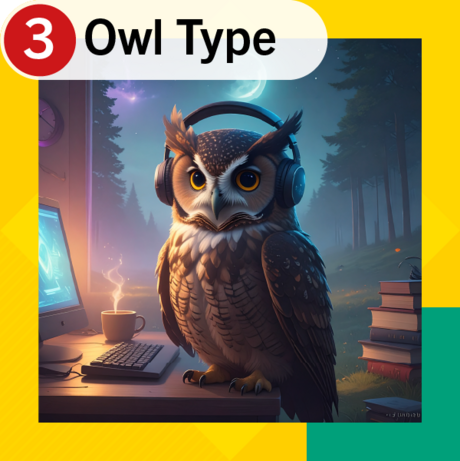 The owl likes to sleep late in the morning and stays awake well into the night. Most young people belong to this category.
Infographics: © AI generated with Adobe Firefly
Practical and everyday tips to improve your sleep - you can get them in the REWE Group sleep challenge on Gemeinsam.topfit. Until 7 December 2025, you can find out, among other things, how a sleep-friendly bedroom should be designed and what your diet has to do with your sleep behaviour. The online challenge will help you to deal better with nightmares and introduce you to aids for better sleep.
You can access the challenge directly on the Topfit homepage. You can find the link on the intranet.
All REWE Group employees can take part. Prizes will be raffled off among all participants.
Further sources (selection): DAK-Gesundheit, TK Sleep Study 2023, Pronova BKK: Sleep Study 2024, Health Knowledge Foundation


