

Hot flushes in meetings, lack of sleep before important appointments: Work meets menopause. Health manager Katharina Galeazzi knows the challenges - both for affected women and senior managers. She is convinced that solutions are best found together.
one: Mrs Galeazzi, the menopause is different for every woman. Some have severe symptoms, while others have none at all. How do women actually know that their symptoms are due to the menopause?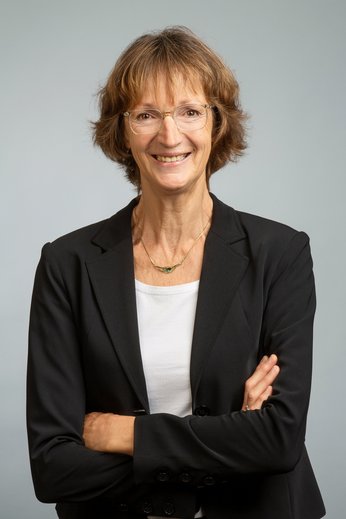 Katharina Galeazzi
 : Basically, there is no causal link that certain symptoms are necessarily associated with the menopause. But the majority of women do have mild to severe symptoms. So if the age is reasonably suitable and there is no illness, women should think in terms of the menopause. The important thing is how well informed a woman is: the more I know about this phase myself, the easier it is for me to categorise my symptoms. Women are on the safe side if they visit a doctor. Fortunately, the subject is increasingly being taken out of the taboo zone.
Katharina Galeazzi
Katharina Galeazzi : Basically, there is no causal link that certain symptoms are necessarily associated with the menopause. But the majority of women do have mild to severe symptoms. So if the age is reasonably suitable and there is no illness, women should think in terms of the menopause. The important thing is how well informed a woman is: the more I know about this phase myself, the easier it is for me to categorise my symptoms. Women are on the safe side if they visit a doctor. Fortunately, the subject is increasingly being taken out of the taboo zone.
one: Just as an example: insomnia at night certainly affects performance during the day. How do affected women communicate the issue to their superiors?
Katharina Galeazzi : Even if the first step is not easy: women should talk openly about how they are feeling and not be afraid to show weakness. On the contrary: being able to say: "I'm not feeling well right now" shows strength, self-reflection and self-care.
As a senior manager, it is my responsibility to empower affected women instead of holding them back. If I, as a manager, notice that an employee is not doing well, that her performance is perhaps becoming less consistent and that she is not seeking dialogue on her own initiative, then I should approach her. A good manager is aware of changes and always creates a working atmosphere that signals to employees: We can talk about your concerns. Whether it's sick small children, relatives in need of care or the menopause.
one: What can senior managers and women do? How can solutions be found?
Katharina Galeazzi : The best way is to work together. It is important to realise that the responsibility lies on both sides: key words are self-care and responsibility as senior managers. Senior managers cannot expect an employee to "function" just as well as always during this challenging phase of life. A sure instinct is just as important as solution-orientated thinking - with the entire team in mind. Perhaps remote work, part-time work or a shift in working hours to the afternoon are conceivable, for example if the morning hours are difficult for the employee due to a lack of sleep at night.
On the other hand, women also have a responsibility to take care of themselves and prevent illness: what can I do myself to feel better? Many seek medical support. But above all, a balanced lifestyle can help: Exercise, a healthy diet, a good sleep routine, balancing stress..
As an employer, REWE Group is also involved in a variety of ways and offers employees qualified contact points; support can also be found here.
one: How can women keep an optimistic view of the changes that menopause brings?
Katharina Galeazzi : The menopause does have its positive aspects. The prerequisite is that I accept the change - it can't be changed anyway. Humour and serenity also help. And not to forget: Many women gain more freedom when the fertile years are over and the children are out of the house. They focus more on themselves again. It is certainly also helpful to look at the menopause in this way: It marks the beginning of the second half of life and we still have forty years ahead of us. And on average, we still have 15 years to go in our careers - these are reasons to celebrate, even for senior managers...
Katharina Galeazzi has been a trainer and consultant for occupational health management, specialising in management training, at Motio GmbH for around 30 years.
Tuesday, 28 April at 2 pm
Facing the menopause with knowledge & confidence
Wednesday, 29 April
Menopause & osteoporosis - surviving stormy times with the right diet
Would you like to join us?
All dates and registration options can be found here.
The menopause is not an illness. It is a phase in a woman's life - and every woman experiences it differently. Because when it begins, how it progresses and how long it lasts is as individual as each woman herself. Even if they do not follow a fixed pattern, the menopause can be divided into different phases. The symptoms and complaints that occur are caused by the fluctuations in hormones - mainly oestrogen and progesterone.
Premenopause
Phase before the menopause. The cycle is usually still regular, but the length changes. Intermenstrual bleeding, mood swings, water retention or headaches can be signs.
Perimenopause
Transitional phase around the menopause. Hormone levels fluctuate greatly, the cycle becomes irregular, classic symptoms include hot flushes and weight gain.
Menopause
Refers to the time of the last menstrual period in a woman's life. It is determined retrospectively when no menstruation has occurred for 12 months. The menopause is therefore not a phase, but a fixed point in time in the menopause.
Postmenopause
The time after the menopause. Menstruation stops permanently and the body adapts to the new hormone status. Some symptoms decrease, but unfortunately so does muscle mass. However, the risk of osteoporosis and cardiovascular diseases increases.
When does it start?
On average, women experience the menopause between the ages of 51 and 52, but around 1% of women are already surprised by it at the age of under 40, and one in a thousand women even under 30. Smoking, diabetes and other chronic illnesses can cause the menopause to occur around two years earlier, and there are also similarities between the menopause age of mothers and daughters.
How does it feel?
Eight out of ten women experience symptoms during the menopause, mainly hot flushes and sweating. Around a third have severe symptoms that severely restrict their quality of life and ability to function at work and in everyday life. These symptoms include sleep disorders, joint pain and dryness of the mucous membranes. Anxiety, irritability, palpitations or palpitations, skin dryness or fatigue are common.
- By colleagues for colleagues: The LoS! multipliers are specially trained to deal with colleagues' concerns. They also have lots of practical tips and specific points of contact for further advice. Under LoS! - Life-phase orientated self-help competence : REWE Group inside, you can find helpful brochures on the intranet, including the menopause guide. If you have a personal request, please send an e-mail to: losrewe-groupcom.
- Employees and senior managers can receive psychosocial counselling from BG Prevent - confidentially and free of charge: Psychosocial counselling
- Contact with gynaecologists can be found here: frauenärzte-im-netz.de,
- Information and further links can be found at menopause-gesellschaft.de


Both German and English comments appear here.
Als Betroffene fühle ich mich hier gut abgeholt und informiert. Vielen Dank, auch für die BG Prevent Angebote. Schön, dass dieses Thema hier offen und überhaupt besprochen wird.