
Climate action is losing ground in the public debate. At the same time, sustainability is on the rise. 97 per cent of German households buy organic products, plant-based alternatives are becoming the norm in many kitchens, and locally sourced produce remains an important factor for many people when making purchasing decisions. How does this all fit together?
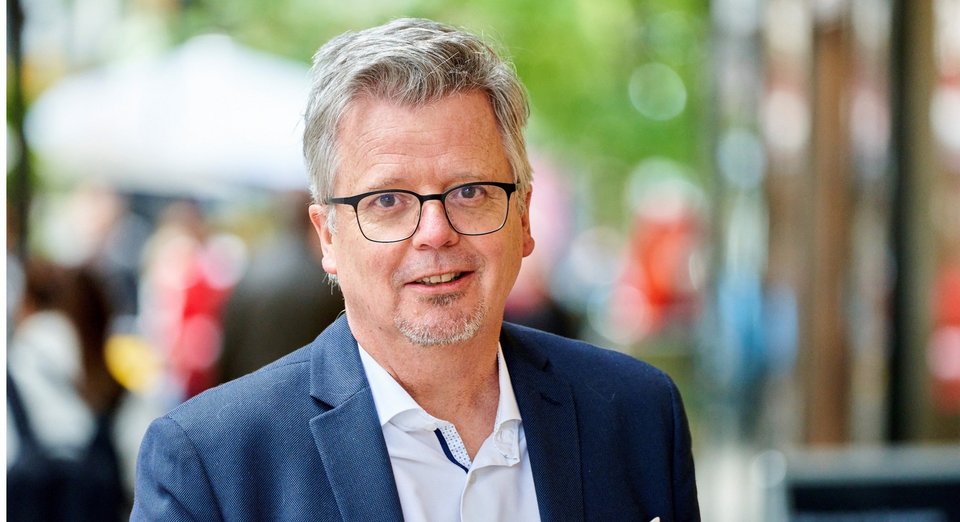
For Dr Robert Kecskes, Senior Insights Director at YouGov and author of the latest study on sustainable food consumption, this is not a contradiction. In this interview, he explains why sustainable consumption today is driven less by moral motives than by personal relevance – and what retailers and manufacturers can learn from this.
one: Mr Kecskes, you carried out a study for the REWE Group into how sustainability in food consumption is developing in Germany. What surprised you most about the study’s findings?
Dr Robert Kecskes: Very littlereally surprised me, as we have been observing many of these trends for years. However, I found two aspects particularly interesting.
Firstly, the picture regarding regional produce is significantly more complex than that for organic or plant-based diets. People associate very different ideas with it – ranging from home and tradition to transparency, trust or economic stability.
Secondly, we’re seeing the first signs of stagnation among younger people. They continue to consume more sustainably than older generations, but are no longer driving the trend as strongly as they were a few years ago.
one: Why is that?
Dr Robert Kecskes: The generation that is now setting up their first households has had particular experiences. Many spent their youth during the pandemic. This was followed by inflation, high rents and economic uncertainty.
This generation often feels they have already made many sacrifices. Consequently, their willingness to accept further calls for sacrifice is waning.
Sustainability remains important. But it must be more closely linked to quality of life, enjoyment and personal benefit. It must convey meaning in both senses of the word: meaningful and sensuous. And it must do so in the here and now. This is what I mean by ‘relevance to the present’. Purely moral arguments are not only insufficient; they lead to reactance. Young people, in particular, no longer want to have to constantly justify what they do, what they consume or what they eat.
one: The public importance of climate protection has declined. At the same time, organic products continue to grow in popularity. How do you explain this apparent contradiction?
Dr Robert Kecskes: At first glance, it does indeed seem contradictory.
Many people today feel they cannot influence global or even national developments. Whilst wars, geopolitical conflicts and economic crises are increasingly experienced on a personal level, they seem too far removed from their own capacity to act.
This is precisely why something else is gaining in importance: the need for resilience and self-efficacy in their immediate surroundings and in daily life. People are looking for areas where they can make their own decisions and make a difference. Diet is one such area.
Organic has now become a matter of course for many people. These days, organic no longer needs explaining, and nobody has to justify buying organic products. Quite the opposite: organic no longer stands for a pair of woollen socks, but for a modern lifestyle. It is often less about saving the world and more about one’s own environment, family and personal health. Sustainability remains relevant – but the reasons behind it are changing.
one: For a long time, sustainability was seen primarily as a matter of attitude. Does the study indicate a shift in purchasing motives?
Dr Robert Kecskes: Yes . The values aren’t disappearing, but the reasons behind them are changing.
In the past, overarching goals such as climate protection, the environment or social responsibility were often at the forefront. Today, personal motives are gaining in importance: health, quality, enjoyment or the satisfaction of making the right decision for oneself and one’s family.
Sustainable consumption is increasingly justified on the basis of everyday life. This is precisely why it is growing particularly strongly in areas where Sustainability is experienced not as a sacrifice, but as an immediate improvement in quality of life.
one: In the study, you describe a trend towards ‘new authenticity’. What do you mean by that?
Dr Robert Kecskes: Many people long for guidance, reliability and authenticity. However, ‘new authenticity’ does not mean a return to the past.
Rather, it is about combining traditional values with modern solutions. People value craftsmanship, quality and regional origins. At the same time, they expect innovation, convenience and products that fit into their everyday lives.
Sustainable offerings that succeed are therefore those that manage to strike precisely this balance: a modern, forward-looking perspective, without losing sight of what is valuable and worth preserving for life on the planet, both ecologically and socially.
one: One particularly interesting finding from the study concerns plant-based alternatives. Milk alternatives continue to grow rapidly, whilst meat substitutes are gaining ground at a significantly slower rate. Why is that?
Dr Robert Kecskes: Many meat alternatives are still perceived primarily as substitutes.
As long as a product is defined mainly by what it replaces, it remains trapped in a logic of comparison. Or to put it another way: as long as a product is perceived as a substitute, it remains on the substitutes’ bench.
Milk alternatives have, to some extent, broken free from this. Many consumers now regard them as products in their own right. Nobody necessarily expects an oat drink to taste exactly like cow’s milk. It serves its own purpose and has found its place in everyday life.
The key challenge for plant-based alternatives is therefore to develop their own unique benefits – beyond Sustainability. Health, enjoyment and suitability for everyday use play a decisive role in this.
one: 68 per cent of households prefer regional products. At the same time, regionality is losing momentum. How does that fit together?
Dr Robert Kecskes: Regionality remains a very strong priority.
At the same time, it is clear that people understand it in very different ways. For some, regionality stands for home and tradition. For others, it means transparency, trust or responsible business practices.
That is why it is no longer enough simply to declare regionality. It must be imbued with concrete relevance and made directly tangible. That is why, for example, ‘Scheine für Vereine’ is associated much more positively with regionality than declarations of regionality on packaging.
Regionality remains important. But it is no longer an automatic guarantee of growth. It must not merely be something that can be bought; it must be something that can be experienced.
one: If you had to distil the findings into one key insight: what should retailers and manufacturers understand right now?
Dr Robert Kecskes: Environmental sustainability alone is no longer a sufficient selling point. The products that will be successful are those that combine responsibility, enjoyment and suitability for everyday use. The future of sustainability in consumption lies where people no longer perceive a contradiction between what is good for them and what is good for the environment and society.
one: What should we be paying particular attention to in the coming years?
Dr Robert Kecskes: We must not reduce nutrition to a purely functional concept.
When we talk about health, we often think of nutritional values, calories or optimisation. But nutrition is more than that. Food always has a social dimension too.
Cooking together, eating together and enjoying food together are important components of quality of life and health. This aspect is frequently underestimated.
In the long term, therefore, it will not just be about what people eat, but also about the role nutrition plays in their everyday lives, their relationships and their social interactions. Sustainability will only succeed if it brings all these dimensions together.
After all, sustainability must bridge the gap with the present. Sustainability has a strong preservative aspect and a strong future-oriented aspect, which might perhaps be described by the phrase ‘suitability for our grandchildren’. In the process, the present – the joy of living in the here and now – is often lost. If Sustainability now also discovers this present-day component – ‘suitability for the present’ – then sustainable consumption will receive another significant boost.


