
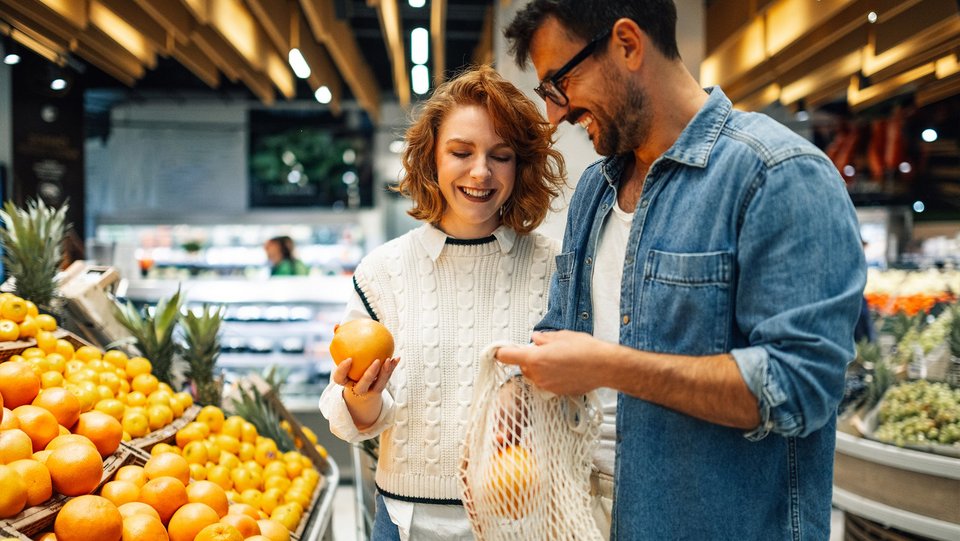
Together with YouGov, we have carried out a study on sustainability in food consumption. The key questions were: What factors influence purchasing decisions for sustainable product ranges today? Are there differences when it comes to organic products, plant-based alternatives and regional products? The report, which is available in the Sustainability section of the REWE Group website, provides an insight into changes in consumer behaviour.
With 50 million customer interactions every week, we at the REWE Group have the opportunity to embed sustainability into people’s everyday lives. This comes with a great responsibility, as food has an impact on climate change and biodiversity throughout its value chain.
That is why, together with YouGov, we have once again investigated how consumer behaviour and preferences in the food retail sector are evolving. The study builds on the first survey from 2023 and highlights the trends and drivers shaping sustainability in consumption today.
Whilst sustainability may have lost priority in the public debate recently, consumer behaviour paints a more nuanced picture: organic remains a stable growth driver, plant-based alternatives are developing in increasingly diverse ways, and regionality remains an important purchasing criterion. At the same time, the study shows that future growth will arise where responsibility, enjoyment and suitability for everyday use come together.
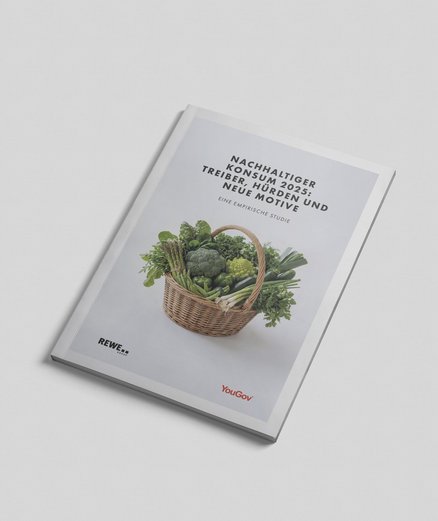 The key findings and the full study (PDF) can be found here:
Study on the Development of Sustainability-Based Food Consumption 2025

„Sustainable consumption is no longer a question of making sacrifices, but of practicality in everyday life. Our study shows that organic, plant-based alternatives and regional products thrive when they combine enjoyment, quality and ease of choice. This is precisely where we see our responsibility as retailers – to make sustainability so accessible that it becomes second nature for as many people as possible.“Dr Daniela Büchel, Member of the Management boardHuman Resources and Sustainability (Chief People and Sustainability Officer)

„The data points to a structural shift: sustainability is driven less by moral considerations and more by its perceived relevance in everyday life. Organic products are well established, plant-based alternatives are growing selectively, and regionality remains relevant, though it is no longer automatically seen as a guarantee of growth. The future lies where Sustainability is perceived as a benefit in its own right – not as a substitute or a compromise.“Dr Robert Kecskes, Senior Insights Director, GermanyYouGov DE Shopper Panel
 ©GettyImages nerudol
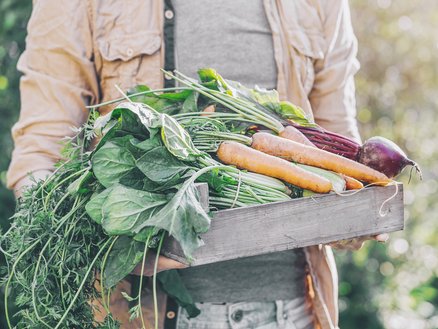
Organic has gone mainstream. Almost all households buy organic products, regardless of their stage of life or generation. In 2025, high inflation did not lead to a decline in organic consumption, but rather to a shift within the organic market towards own-brand products.
©GettyImages nerudol
Organic has gone mainstream. Almost all households buy organic products, regardless of their stage of life or generation. In 2025, high inflation did not lead to a decline in organic consumption, but rather to a shift within the organic market towards own-brand products.
 ©GettyImages brebca
The market for plant-based alternatives is no longer a homogeneous growth market: plant-based milk alternatives and vegan and vegetarian confectionery continue to grow strongly. However, traditional meat substitutes have lacked growth momentum since 2022.
©GettyImages brebca
The market for plant-based alternatives is no longer a homogeneous growth market: plant-based milk alternatives and vegan and vegetarian confectionery continue to grow strongly. However, traditional meat substitutes have lacked growth momentum since 2022.
 ©GettyImages tibor13
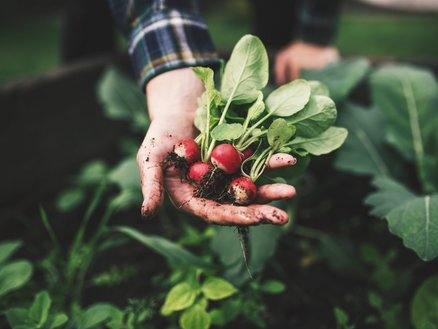
Regional products continue to be held in very high regard. Around two-thirds of households prefer regional products. Around half are willing to pay more for them – significantly more than for organic products.
©GettyImages tibor13
Regional products continue to be held in very high regard. Around two-thirds of households prefer regional products. Around half are willing to pay more for them – significantly more than for organic products.
Organic products have long since become mainstream and are set to grow at an above-average rate by 2025, even though environmental and climate protection are falling down the list of public priorities. Organic products are seen as a natural part of a ‘good’ and healthy diet.
The growth of plant-based alternatives is driven almost exclusively by existing plant-based eating habits – which have recently stagnated. Plant-based alternatives are growing in popularity where they move away from the mindset of simply being substitutes.
Despite its high level, interest in regional products has been on the decline since reaching an all-time high during the pandemic. Regionality therefore remains an important issue, but further growth is not guaranteed.
Plant-based alternatives are increasingly taking on a variety of forms. Growth no longer stems automatically from the fact that a product is ‘plant-based’, but rather from products that offer consumers a unique benefit.


