
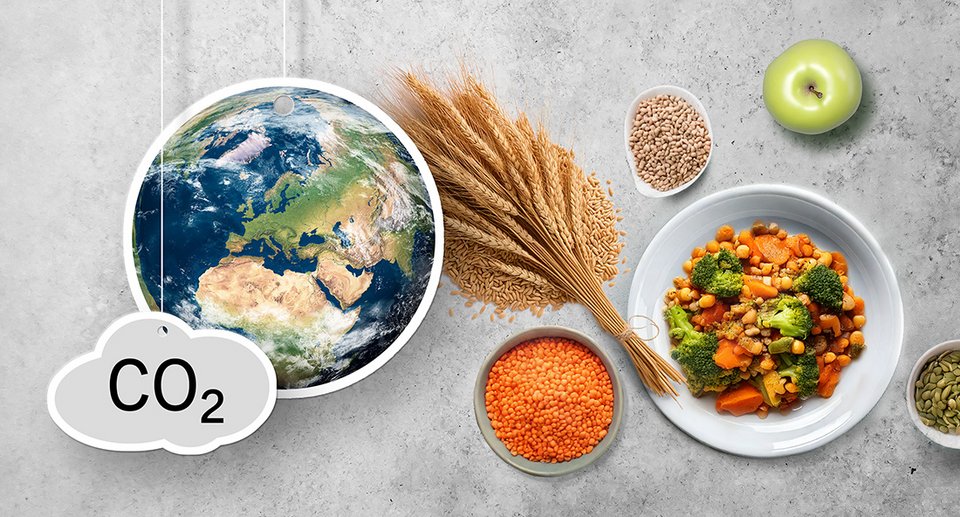
According to United Nations projections, up to ten billion people could be living in the world by 2050. Consequently, one of the major challenges of the future will be to feed these people healthily without overburdening our planet. As a food retailer and a daily companion to our customers, we are working hard to meet this challenge.
One promising approach to tackling this challenge is the Planetary Health Diet. It was developed by an international team of 37 scientists from the EAT-Lancet Commission - a global body of experts that develops science-based recommendations for healthy, equitable and sustainable food systems within the ecological limits of our planet. The aim of the Planetary Health Diet is therefore to define a globally applicable diet that promotes people's health while protecting the environment.
But which foods are actually good for the environment and climate?A key aspect of the environmental impact of products is their CO₂ emissions. This is made up of various factors such as import, storage and preservation through to the potential disposal of products. The type of food also plays a role: meat products have a higher environmental footprint than plant-based alternatives due to methane emissions and deforestation for animal feed. The latter, on the other hand, tend to reduce emissions, save water and improve land utilisation.
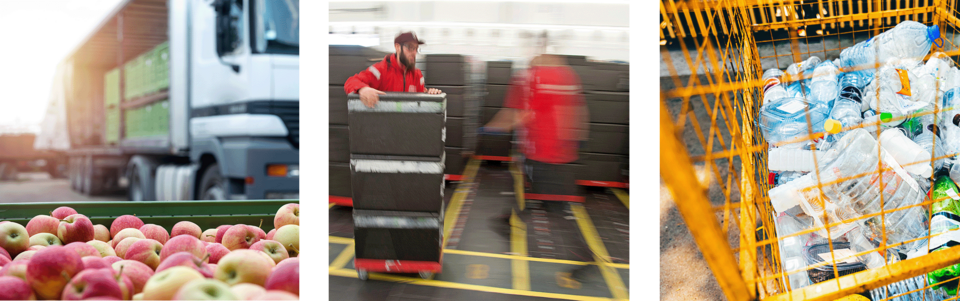 The storage, preservation and disposal of products is of central importance for the environmental impact of food. aleksandar Malivuk | Shutterstock, Achim Bachhausen | REWE Group, Olga Pankova | Getty Images
On top of this, livestock farming takes up considerable agricultural land - especially for the cultivation of feed for cattle, pigs and poultry. A reduction in animal products in combination with sustainable farming methods would not only relieve the burden on agriculture, but also promote long-term food security.
In addition, the Planetary Health Diet emphasises the diversity of plant-based foods in the daily diet. Vegetables, fruit, pulses, nuts, wholemeal products and unsaturated fats in particular are recommended as the basis of a healthy and sustainable diet.
However, in order to make the global diet flexible, practicable for everyone and adaptable to different eating styles and cultural traditions, the consumption of plant-based foods is supplemented by moderate amounts of fish and seafood as well as poultry. However, starchy vegetables such as potatoes, dairy products, red meat, sugar and saturated fats should only play a subordinate role.
With this balanced approach, the Planetary Health Diet also makes an important contribution at a global level to achieving international sustainability goals, such as the United Nations Sustainable Development Goals (SDGs). According to the EAT-Lancet Commission, it is estimated that the implementation of the environmentally friendly nutrition plan could prevent around 11 million deaths per year due to either malnutrition or deficiency
We at REWE Group have also taken up the concept of the Planetary Health Diet and anchored it specifically in our protein strategy. This is intended to provide information on how a balanced diet with less meat, diverse plant-based alternatives and sustainable production can help to preserve biodiversity, conserve water resources and protect the climate.
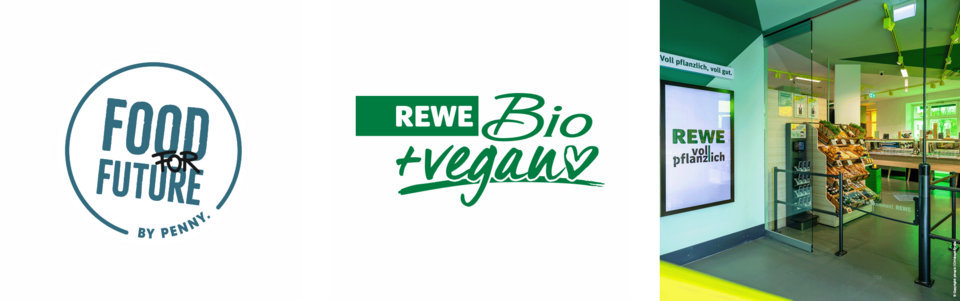 The own brands "Food For Future" at PENNY and "REWE Bio + vegan" are just as convincing as the "REWE voll pflanzlich" store in Berlin. Photo credits REWE voll pflanzlich: © pivopix | Christoph Große
We not only take the recommendations of the Planetary Health Diet seriously, but have already successfully implemented them in numerous areas of our protein strategy. For example, we already offer customers over 1,800 purely plant-based products at REWE in Germany and around 1,800 at BILLA/BILLA PLUS in Austria. The REWE delivery service offers around 2,700 items, including fruit and vegetables. We are also making plant-based products accessible to a broad customer group with strong own brands such as "Food For Future" at PENNY and "REWE Bio + vegan". Another special milestone was the opening of the first "REWE voll pflanzlich" store, which makes sustainable nutrition visible and tangible in everyday life with a completely plant-based range.
This strategic orientation is also reflected in our market position - REWE is already the sales and turnover market leader in the vegetarian-vegan segment, and PENNY is also the turnover market leader. In order to not only consolidate this pioneering role, but to further expand it, we are continuously developing our product range strategies in line with the recommendations of the Planetary Health Diet.


Both German and English comments appear here.
Ich finde die Strategie super und stimme Dominik und Silke zu: Wenn wir wirklich 60 % pflanzliche Proteine im Sortiment anstreben, sollten wir das auch in unseren Kantinen sichtbar machen. Aktuell sieht’s leider anders aus – nur etwa 1 von 10 Gerichten ist pflanzlich, und an fast der Hälfte der Tage gibt’s gar keine vegane Option.
Und selbst wenn es ein pflanzliches Gericht gibt, sind die Nährwerte nicht ideal: mehr als doppelt so viel Zucker und Kohlenhydrate, dafür weniger als halb so viel Eiweiß im Vergleich zu tierischen Gerichten.
Ich wünsche mir, dass wir die Proteinstrategie nicht nur extern umsetzen, sondern auch intern leben.
Das klingt sehr schlüssig und sinnvoll. Konsequent wäre es, wenn wir dann auch die Speiseplangestaltung im Kasino auf 60% pflanzlich verschieben. Die meisten Hauptgerichte beinhalten immer noch tierische Produkte. Vegetarische Varianten enthalten leider nicht immer sinnvolle tierische Proteine, sondern sind häufig sehr kohlenhydratlastig.
Weiterhin sehr stark REWE! Auch wenn wir konsequent auf dem Weg bleiben müssen. Toll das wir hier so eine Vorreiterrolle in der (deutschen) Supermarkt-Branche haben.
Bezüglich des Angebots in unseren Kölner Kasinos möchte ich mich Silke anschließen. Dies ist bei diesem Thema leider noch etwas rückständig.