
Considerable growth in bookings, exciting new destinations: The messages from the DERTOUR Group's colleagues are usually enticing and promising. However, the war in the Middle East is currently putting a massive damper on the beautiful, colourful world of travel. Extremely in demand in these times: the crisis management team headed by Melanie Gerhardt. Together with our partners, they are responsible for repatriating guests from affected regions and are in close contact with the authorities in Germany and abroad, airlines, hoteliers and destination agencies. Melanie Gerhardt gives us an insight into her current work.
In her more than 25 years as Head of DERTOUR Crisis Management, Melanie Gerhardt has accompanied almost every form of global challenge: from the attacks on 11 September 2001 to natural disasters such as large-scale fires and tsunamis to political unrest. This also includes large-scale evacuations, such as during the Arab Spring in 2011 or during the coronavirus pandemic. With her many years of experience, her strategic view and her contribution to many industry-wide guidelines and scenario planning, she has been ensuring that DERTOUR Group guests can travel safely and reliably for years.
This expertise is particularly evident now. For around two weeks, Melanie Gerhardt and her team have been working flat out to repatriate travellers affected by the Middle East conflict. A mid-four-figure number of European travellers were in the affected regions.
In the meantime, almost all guests from the Middle East regions have been brought home safely.
It was and is not only guests in Dubai, Abu Dhabi, Qatar or Bahrain who were affected. "If the airlines Emirates, Etihad and Qatar Airways are cancelled, around 600 aircraft will be missing from global air traffic. This will also affect our guests travelling to destinations in the Indian Ocean, the Maldives or Thailand, who have not flown there directly but on one of these Gulf airlines," explained DERTOUR Group CEO Christoph Debus recently in an interview with the Süddeutsche Zeitung.
"The past few weeks have shown us once again how quickly the world can change and how important it is to act as one. Thanks to the extraordinary commitment of our entire team, we were able to provide our guests with security and stand by them in this extremely critical situation - I am sincerely grateful for that," added Debus in an interview with the REWE Group.
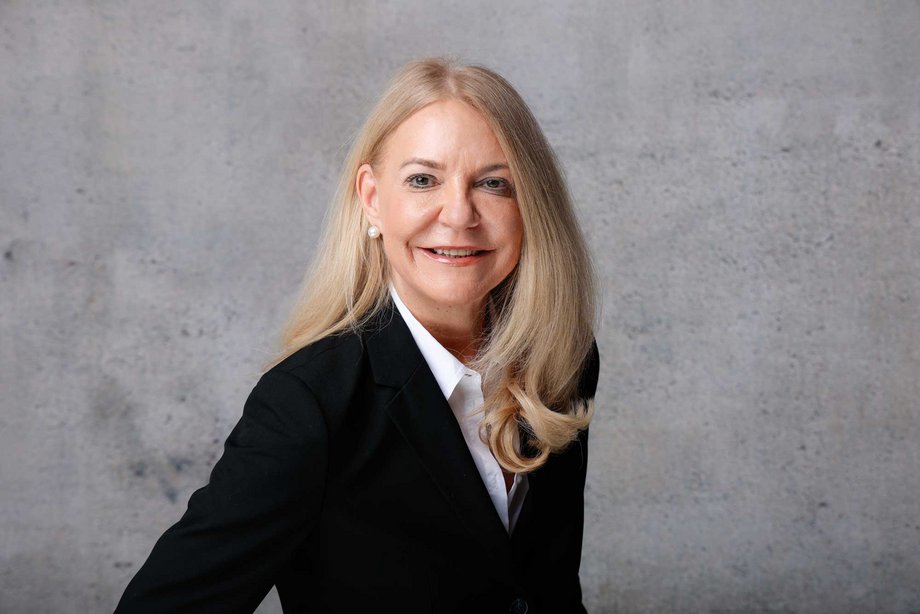 Melanie Gerhardt | Photo © DERTOUR Group
one: Melanie, what are your working days like at the moment?
Melanie Gerhardt | Photo © DERTOUR Group
one: Melanie, what are your working days like at the moment?
Melanie Gerhardt : My working days are currently highly dynamic and extremely intense - although I only live a few kilometres away from the Frankfurt site, I have been staying in a hotel directly opposite our crisis centre for 14 days now. Being in close proximity to the crisis team and teams is essential in situations like this and very important to me. Our operations team is physically manned around the clock - 24/7, without interruption.
Since the start of the war on 28 February 2026, we have activated our crisis management team and ramped up all support teams. We are currently working in several parallel units: various task forces, for example for flight coordination, the Middle East and long-haul routes, as well as our guest support teams in Germany (clearing team) and in the destination agency on site. The development of the situation is continuously documented and evaluated for each country.
Due to the time difference - for example, 6.00 a.m. in the UAE means 3.00 a.m. German time - it is crucial that all adjustments from the support and flight teams are also updated throughout the night so that travellers have all the information they need for their return journey early in the morning.
The repatriation of several thousand guests was and is a logistical tour de force.
Last week, several hundred employees at the DERTOUR head office and in the travel agencies, as well as many colleagues from our incoming agency in the UAE and other destinations, worked to look after our guests and ensure their safe return.
„Bringing back several thousand guests was and is a logistical tour de force.“ Melanie Gerhardt
one: What happens behind the scenes as soon as a situation comes to a head? What are the first steps?
Melanie Gerhardt: As soon as a situation escalates, we have a clearly structured process in place. The first step is always to collate all available information - from our digital monitoring systems, news sources, airlines and destination agencies - and immediately assess the potential impact in the crisis team.
This is followed within a very short time by the operational steps and decisions on necessary measures such as increased communication, rebookings or evacuations.
At the same time, we use our intranet to ensure that all areas of the company are informed synchronously and that we communicate consistently.
one: What is the composition of your crisis team? And who are your closest partners?
Melanie Gerhardt : Our crisis team consists of a clearly defined core team made up of the managing directors, the responsible product area and our so-called task force coordinators, the flight area, the head of the clearing team as well as the guest care unit and tour guide organisation, the legal department and the communications department. These colleagues are in turn responsible for ensuring that their teams and departments are kept informed.
All decisions, measures and situation assessments are fed back to the crisis team in real time so that we have a complete picture of the situation at all times.
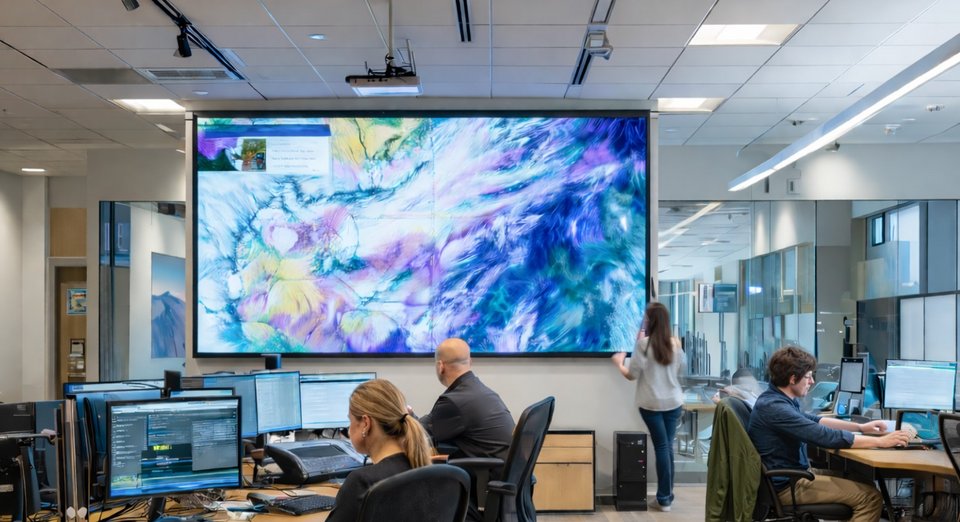
 The operational crisis team is physically manned around the clock - 24/7, without interruption. Photo ©DERTOUR Group
one: How do you make your decisions? How do you decide which guests are allowed to fly out first?
The operational crisis team is physically manned around the clock - 24/7, without interruption. Photo ©DERTOUR Group
one: How do you make your decisions? How do you decide which guests are allowed to fly out first?
Melanie Gerhardt : Our decisions are based on structured and transparent prioritisation. Travellers in direct danger zones always have first priority, for example if hotels have to be evacuated. This is immediately followed by vulnerable groups - people with health impairments. In the next step, travellers are brought home successively after the originally planned departure date. In this way, we ensure that we proceed systematically and fairly.
At the same time, we take into account special individual situations and families with children, whom we also prioritise for departure.
Our aim is clear: we want to get all our guests back to Germany as quickly and safely as possible. Safety is always our top priority.
Emirates has performed exceptionally well during this crisis. Many additional seats were made available at short notice - often in the middle of the night (local time) - even for guests who actually had a return flight with another airline. We purchased these additional flights at night. This required a high degree of flexibility from everyone involved, but enabled us to get guests out of the country more quickly.
one: How do you maintain contact with the guests on site in such situations - and what are their biggest concerns?
Melanie Gerhardt : In crisis situations, reliable, consistent and personal communication is our top priority. Our guests should know that we are there for them at all times. They are accompanied on site by our tour guides, who are available at all times and monitor the situation very closely. We also operate our own crisis hotline for affected guests. This hotline offers immediate guidance and rapid support at any time of day or night. Our travel agency partners were also an important anchor for our travellers.
Our guests' biggest concerns at such times usually revolve around two points: How safe am I and when will I be going home? This is precisely why we rely on transparent information, personal contacts and fast, reliable solutions.
„Our goal is clear: we want to get all our guests back to Germany as quickly and safely as possible. Safety is always our top priority.“ Melanie Gerhardt
one: You've probably experienced almost every tourism crisis situation - from bus crashes to tsunamis. How do you categorise the current Middle East crisis?
Melanie Gerhardt : The current Middle East crisis was - and still is - an extraordinary logistical and operational challenge, as several crisis parameters came together simultaneously in different countries and each developed its own dynamic. Security-related developments that required immediate intervention were always taken into account. For example, guests often had to interrupt transfers to the airport and go to a shelter immediately, or there were obstacles to evacuation journeys from Doha to Saudi Arabia. Extremely short decision windows for air corridors, night-time flight clearances and constant new escalation developments in the destination areas required full attention, absolute flexibility and often immediate intervention on our part.
one: European travellers long for safety, simplicity and relaxation - from planning their holiday to returning home. This is the key finding of the recently published European Trend Report by the DERTOUR Group*, which was conducted before the current events in the Middle East at the beginning of February. How does this fit in with the tourism industry's business model in light of the current Middle East crisis?
Melanie Gerhardt: European travellers' desire for safety, simplicity and genuine relaxation confirms exactly what package holidays stand for - especially in times of crisis. The current Middle East crisis also shows how important it is to have a reliable partner who assesses risks, makes decisions and reacts quickly in an emergency.
It is also important to note that package holiday guests do not incur any additional costs for flights or hotels in such emergencies, which is a key part of the protection offered by a package holiday.
Our crisis management has been designed for many years to protect guests, inform them and give them guidance. Package holidays therefore offer a safety net that individual travellers do not have in this form.
It is clear to me that the desire for security strengthens our business model - and our structures prove every day that we fulfil this responsibility.
one: Another result of your trend report is that personal contacts are in demand: According to the report, it is important for today's travellers to be able to fall back on competent support in an emergency: 32.1% of respondents who usually use or are interested in personal advice particularly value help in a crisis. How does the DERTOUR Group fulfil this need?
Melanie Gerhardt: The strong need for personal contacts confirms exactly what many of our guests have appreciated about package holidays for years: they are not travelling alone. This crisis shows how important and valuable it is to have a personal contact person.
Our guests know that they can rely on us: on experienced tour guides, dedicated local teams and round-the-clock availability. Especially in challenging situations, it is these people who provide support - who reassure, listen, think along and open up paths when things get difficult. For me, this is a key success factor: personal contacts who provide reassurance in critical moments and are tangibly at our guests' side.