
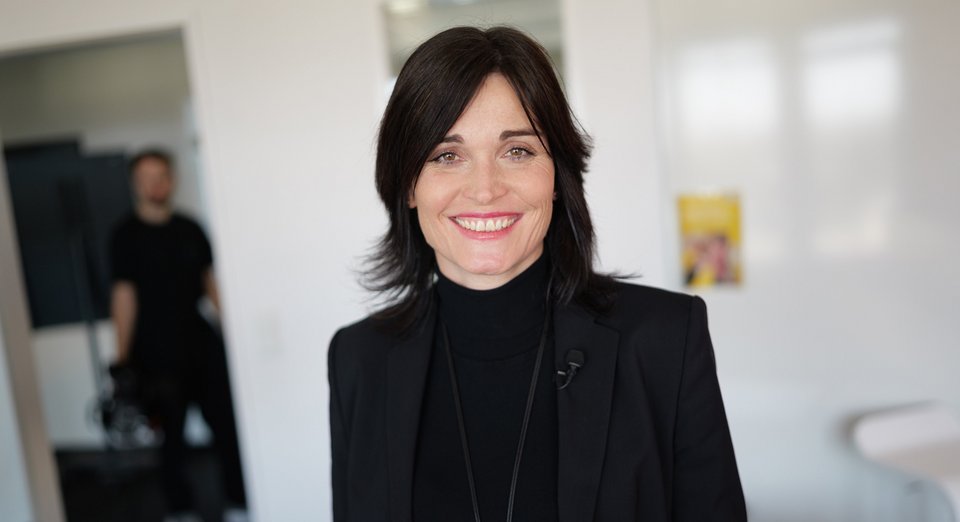
In a male-dominated IT world, the example of REWE digital manager Wenke Weißmann shows how women can get ahead - with potential, visibility and good support. A conversation about the importance of superiors, partners and modern working models for women's career paths. And about the fact that leadership should be one thing regardless of gender: good and contemporary.
one: Wenke, you are a successful woman at REWE digital in an IT industry that is still rather male-dominated. What experiences have you had on your career path? And who or what has particularly helped you to develop professionally?
Wenke Weißmann: First of all, I would like to say that I studied business informatics in a very male-dominated environment - so as a woman, I am used to being more of a minority, even if I would like it to be otherwise. If there's one thing I've learnt in my professional life: Achievement alone is not enough. You need visibility and networks. This is a crucial factor that women in particular could work on even more.
„We should not be talking about female leadership, but about good and contemporary leadership.“Wenke Weißmann I myself was lucky that my previous bosses - both women - were very modern senior managers. Just the way you want them to be, regardless of gender. Kirsten Schlemmer, my first senior manager at REWE digital - who asked me about two years ago if I would join her in the newly created Business Transformation department - always looks at: How do I position my employees? What is their next development step? How do I make them visible? It helps enormously when a senior manager recognises you, promotes your development and encourages you. You need that one "go", that encouragement to keep at it.
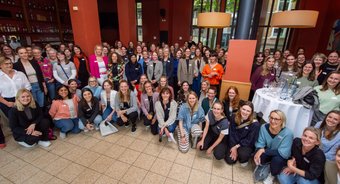
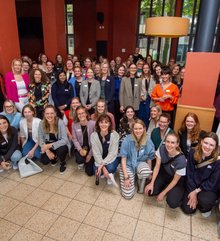
"Work on your own mindset: actively use networks, for example f.ernetzt, become visible, get support. Mentoring programmes like Women's Drive are important. Coaching is a sign of professionalism, not weakness."
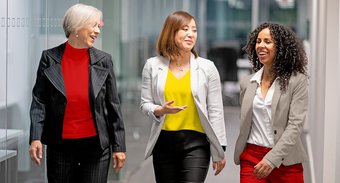
one: Even if it should no longer play a role in conversations with female senior managers, the question of work-life balance in this context: As a mother with a full-time management position - how do you do it? What personal strategies, professional structures or working models enable you to reconcile family and leadership?
Wenke Weißmann : I shared this question with my husband in advance. He said: "Your answer is clear: you need a strong partner to go along with you." And yes, that's absolutely true. When I started at REWE Group in 2016, our children were still very young. In addition to private support, I believe that balancing family and leadership requires three things:
- Clarity about your own priorities,
- a management culture that values results more than presence.
- structural flexibility in working models
The first point is individual, but the other two can be controlled by the company. In my opinion, the belief that only those who are on site can lead is no longer up to date. A management culture should always be orientated primarily towards responsibility for results - not office presence. I don't need to be physically present every day to empower my team.
„We need more female role models in which women can recognise themselves.“Wenke Weißmann I would like to see a more open and modern management culture and models such as part-time management becoming the norm. Just because a woman goes on parental leave and returns part-time should not be a no-go for management roles. Of course there are organisational challenges - I see that in my team too. But modern working structures actually offer everything we need. If we see ourselves as an open-minded company, this should also be reflected in our working models.
And yes, I agree: we shouldn't actually be talking about "female leadership", but about good and contemporary leadership.
one: What can senior managers, whether male or female, do to specifically attract women to the IT sector and support them in their further development?
Wenke Weißmann: In my view, women don't stay away because they can't do IT or don't find it sexy. They stay away because certain framework conditions don't suit their lives. And that's exactly where senior managers should start.
Management should recognise potential early on and develop people, not just when they are already performing. We could become even stronger in the promotion of women, for example through talent reviews that look less at the person in the narrower sense and more neutrally at competences and potential. And, here I come back to visibility, through role models: We need more female role models in which women can recognise themselves.
- 2016: Joined REWE digital as a strategic project manager (including REWE to go cooperation with Aral, integration of Lekkerland)
- 2020 as part of the "Symphonie" reorganisation: CPO (Chief Product Owner)
- End of 2023: Kirsten Schlemmer brings her into the Business Transformation division as Chief Project Manager, where she is responsible for the Transformation Office Steering and Value Capture in the NEO transformation project. She manages 3 employees in a disciplinary capacity and around 15 in a technical capacity
- Mentor in the Women's Drive. She is currently completing the Management Academy.


