
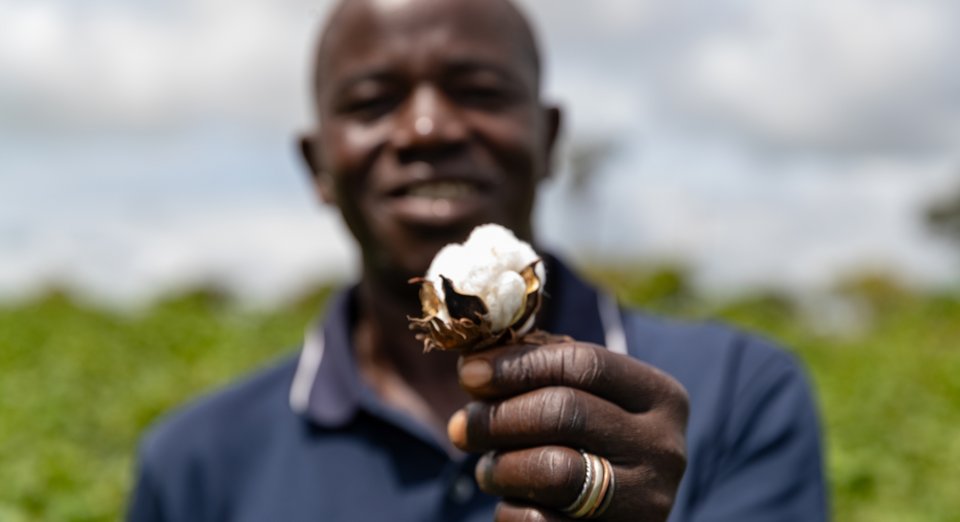
As a trading and tourism company, we source products and services from a large number of suppliers and from different global supply chains. We want to reduce the ecological and social impact of our actions wherever possible. As REWE Group, we have now reached a milestone: we have succeeded in physically tracing 100 per cent of the Cotton made in Africa cotton used in our own brands back to its origin.
We are committed to respecting human rights, improved working conditions and fair trade. We want to protect natural resources and preserve biodiversity along the supply chain. It is important for our customers that we create transparency in the supply chain and guarantee the traceability of our products from production to the shelf.
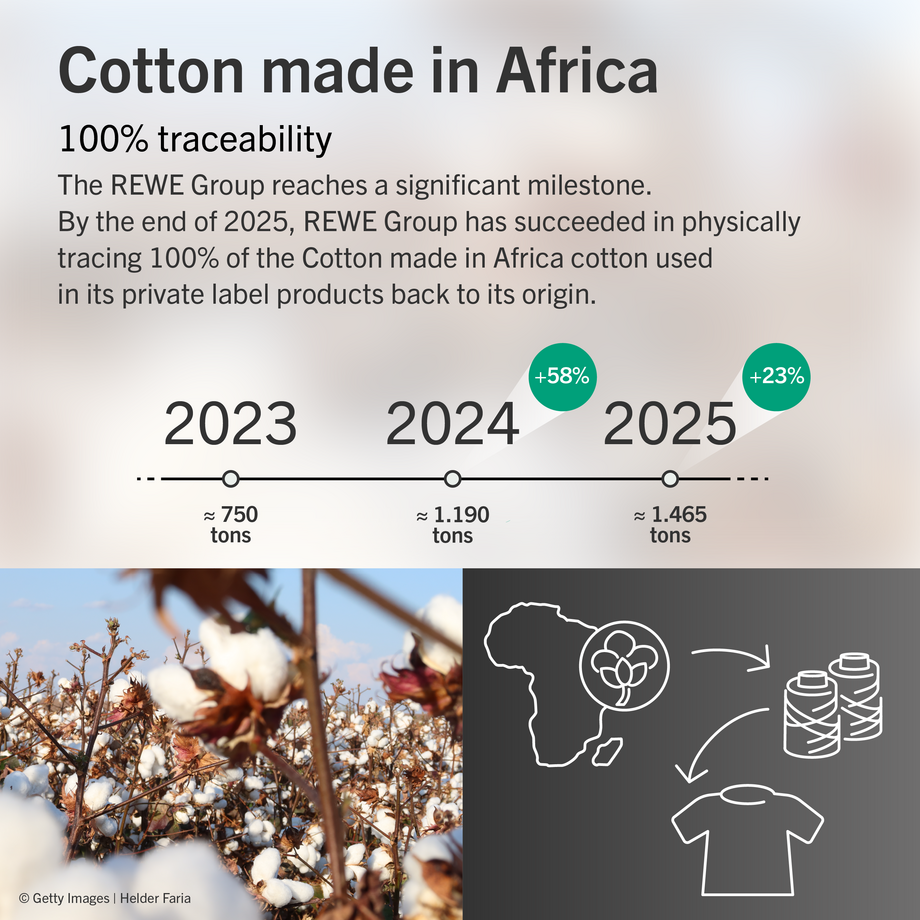
As REWE Group, we have now reached a significant milestone.at the end of 2025, we succeeded in physically tracing 100 per cent of the Cotton made in Africa cotton used in our own brands back to its origin. REWE Group has supported the Aid by Trade Foundation's Cotton made in Africa initiative since 2008 - and is thus consistently committed to the principle of "helping people to help themselves". The aim of the initiative is to improve the living standards of African smallholder farmers in the long term while protecting natural resources.
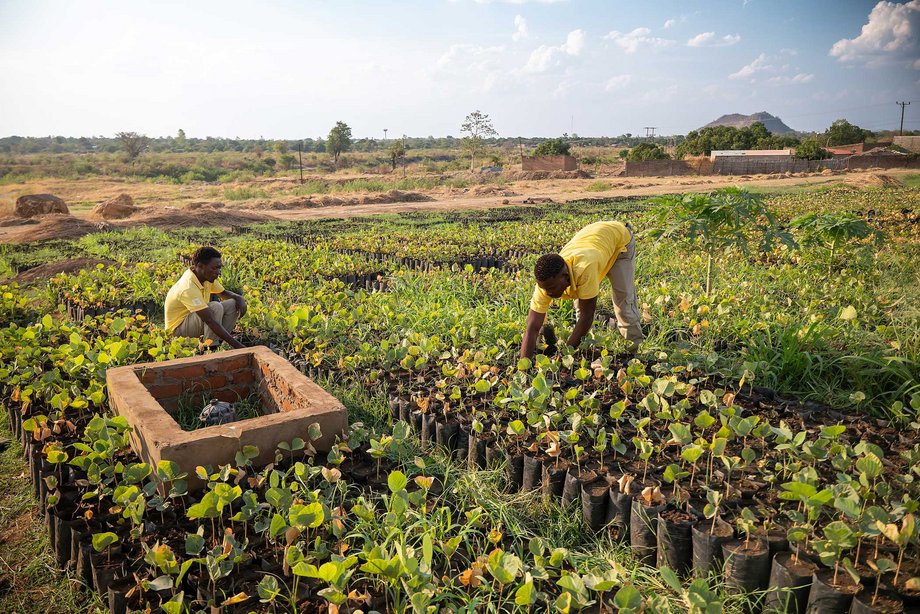 Photo: ©Aid by Trade Foundation
The milestone is the result of consistent further development. In 2019, the proportion of sustainably certified cotton in own brands was already 85 per cent. Since 2022, 100 per cent of the own-brand textiles used have come from sustainably certified sources.
With the target now achieved, REWE Group is taking a decisive step further with CmiA: 100 per cent physical traceability via the Hard Identity Preserved (HIP) system - from the cotton bale to the finished textile.
"The transition from pure certification to full physical traceability is a logical next step for us on the way to more sustainable supply chains in the textile sector. In doing so, we are taking responsibility beyond individual standards and creating transparency along the entire value chain," says Torsten Stau, Managing Director Non Food / Indirect Spend.
This progress was made possible by switching from mass balance models* to physically separate flows of goods, long-standing partnerships with the Aid by Trade Foundation and suppliers, as well as the targeted expansion of data and verification systems along the supply chain.
The Cotton made in Africa Initiative (CmiA) was founded in 2005 under the umbrella of the Hamburg-based Aid by Trade Foundation (AbTF) and is now one of the internationally recognised standards for sustainably verified cotton from Africa.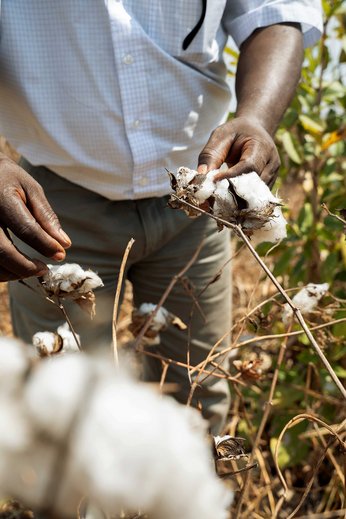 Photo: ©Aid by Trade Foundation
The organisation pursues a clear approach: trade instead of donations. Through fair market mechanisms and local training, agricultural methods are improved, yields increased and the environmental footprint reduced - without making small farmers dependent.
Photo: ©Aid by Trade Foundation
The organisation pursues a clear approach: trade instead of donations. Through fair market mechanisms and local training, agricultural methods are improved, yields increased and the environmental footprint reduced - without making small farmers dependent.
"The physical traceability of cotton - from the bale to the yarn to the finished textile - is a crucial tool for credible Sustainability in global supply chains," explains Tina Stridde, Managing Director of the Aid by Trade Foundation.
Clear message
By achieving 100 per cent HIP traceability, REWE Group is underlining its commitment to permanently anchoring transparency and responsibility in its textile supply chains.
*In mass balance models, sustainably certified cotton can be mixed with non-certified cotton. With the Hard Identity Preserved System (HIP), the exact opposite happens. The cotton is kept separate along the entire supply chain. This means that every step is physically traceable and documented.