
Human rights apply universally - every day. International Human Rights Day on 10 December reminds us how important it is to combine corporate action with responsibility - for respecting human rights and protecting the environment.
REWE Group has been committed to strengthening human rights and preventing their violation for many years. In addition, the Supply Chain Due Diligence Act (LkSG) creates a binding framework that concretises our responsibility.
Since 2023, the LkSG has obliged companies such as REWE Group in Germany to ensure compliance with human rights and environmental standards in their global supply chains. On Human Rights Day, three colleagues from the project team provide insights into their work on the Supply Chain Due Diligence Act.
 Kathrin Daivandran, Project Management LkSG | Photo: ©privat
"As the central coordinator for the LkSG, I oversee the Group-wide implementation and management of the project for compliance with human rights and environmental due diligence obligations. As a project team, we are responsible for organising company-wide processes, standards and interfaces in such a way that we can identify potential risks in the supply chain at an early stage, assess them and respond appropriately.
Kathrin Daivandran, Project Management LkSG | Photo: ©privat
"As the central coordinator for the LkSG, I oversee the Group-wide implementation and management of the project for compliance with human rights and environmental due diligence obligations. As a project team, we are responsible for organising company-wide processes, standards and interfaces in such a way that we can identify potential risks in the supply chain at an early stage, assess them and respond appropriately.
As part of the LkSG, we carry out risk analyses in the supply chain and in our own Business Areas together with colleagues from the units and Central Units and jointly develop measures to reduce or avoid identified risks. The LkSG also obliges us to set up a centralised whistleblowing system. My team manages this channel and coordinates the processing of incoming complaints (see below).
A revised version of the LkSG is expected at the beginning of the year - presumably with administrative simplifications. However, the core elements of the LkSG will remain the same, as will our aspirations: for us, it is about taking corporate responsibility, recognising risks and enabling concrete long-term improvements for people and the environment along our supply chains. To implement the LkSG, we have established a Group-wide structure in which many colleagues in the Central Units and companies are integrated."
Kathrin Daivandran, Project Management LkSG
 Linda Knist, LkSG Case Manager | Photo: ©privat
"In order to fulfil our responsibility, we also take care to clarify potential disruptive factors along the supply chain. As the "LkSG Case Manager", I clarify information and complaints relating to our Business Areas - whether from employees, affected persons along the supply chain or external organisations such as NGOs.
Linda Knist, LkSG Case Manager | Photo: ©privat
"In order to fulfil our responsibility, we also take care to clarify potential disruptive factors along the supply chain. As the "LkSG Case Manager", I clarify information and complaints relating to our Business Areas - whether from employees, affected persons along the supply chain or external organisations such as NGOs.
If a report is received, we examine the situation carefully - through discussions with suppliers, document analyses and further research. This allows us to investigate missing health and safety equipment or irregularities in wage payments, for example. The aim is to identify real risks and effectively help the people affected - not just to fulfil legal obligations.
Protecting human rights and environmental standards is a shared responsibility - which is why it is important to us that not only we in the sustainability team, but all employees take responsibility and actively contribute to this. Responsible behaviour begins in our own working environment and also includes taking a careful look at the behaviour of colleagues, business partners and suppliers. Anomalies or doubts should not go unnoticed - the first step can be a conversation with the manager or sustainability officer. Alternatively, confidential reporting channels such as the whistleblower system or our human rights mailbox (humanrights@rewe-group.com) are available, including for anonymous reports."
Linda Knist, LkSG Case Manager
 Laura Meissner, Sustainability Manager Focus Human Rights | Photo: ©privat
"Human rights are not a trendy topic, but a universal legal right that affects us all. As a sustainability manager with a focus on human rights due diligence, I deal daily with the question of how we can improve human rights and working conditions along our supply chains and help to ensure that they are respected and protected.
Laura Meissner, Sustainability Manager Focus Human Rights | Photo: ©privat
"Human rights are not a trendy topic, but a universal legal right that affects us all. As a sustainability manager with a focus on human rights due diligence, I deal daily with the question of how we can improve human rights and working conditions along our supply chains and help to ensure that they are respected and protected.
REWE Group has implemented numerous measures to this end, both internally and at all levels of the supply chain. These include guidelines on social and ethical standards, a Supplier Code of Conduct and our policy statement on human rights and the environment. Our suppliers must fulfil high requirements, e.g. in terms of social standards, but we also support them.
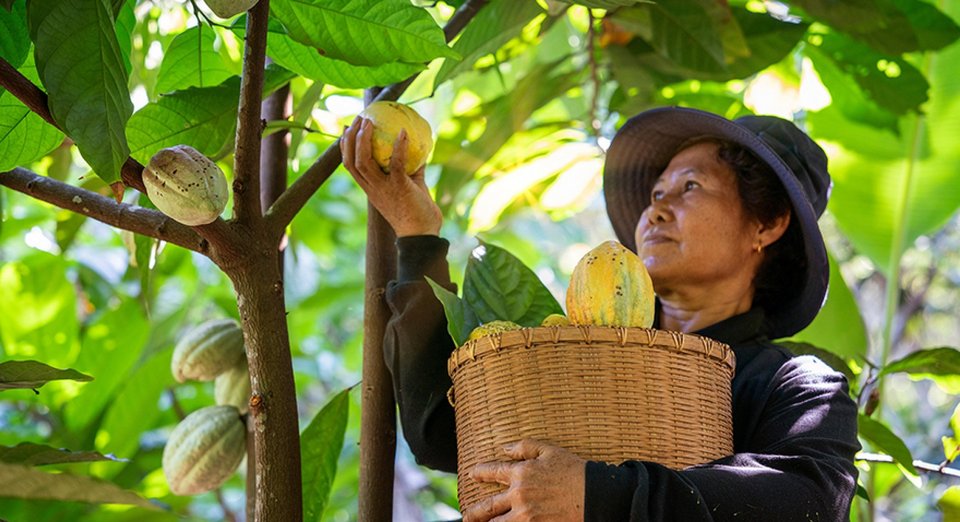
We try to work as closely and concretely as possible on the issues in the supply chain. We offer training programmes in which we accompany selected factories over a longer period of time and support them as needed, for example in setting up internal grievance mechanisms or calculating and correctly paying overtime. In the case of key commodities, we often work together with the industry to find solutions, such as in our projects on living incomes for bananas and coffee and as part of the Cocoa Forum.
REWE Group took responsibility for the protection of people and the environment even before the LkSG came into force. From my point of view, it is also crucial that we continue along this path consistently. Because ultimately, it's not just about what is required by law, but what is necessary and right."
Laura Meissner, Sustainability Manager Focus Human Rights
Human rights and environmental protection affect us all - whether in purchasing, logistics, in the shop or in administration. Everyone can help to recognise and report risks.
Human Rights Day reminds us why we are committed to this every day: Because there are people behind every supply chain.