
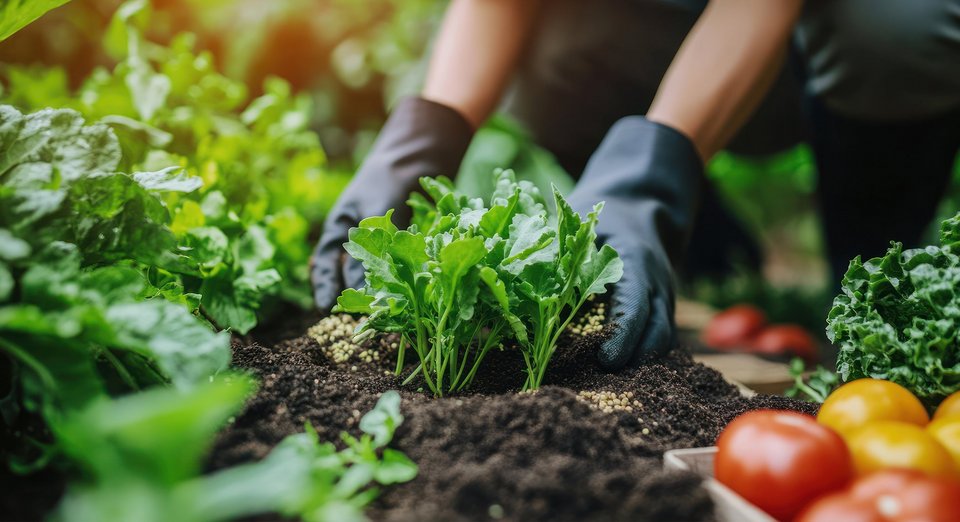
To protect the peatlands, REWE Group only offers soil with peat alternatives in the REWE, PENNY Germany and toom stores. Why is this important? Peat is extracted from drained moors. But only intact moors can store carbon dioxide. If peat, which has been stored for thousands of years, is extracted and used in potting soil, climate-damaging CO2 is released. Gardening without peat therefore contributes to climate protection. We explain the background to our commitment and provide tips on peat-free gardening.
As spring approaches, the demand for potting soil is on the rise again. However, many people do not realise that most of it contains peat - the material from which our moors are made. As a company committed to climate protection, we do not accept the serious effects of peat extraction. This is because we are committed to science-based targets based on the 1.5-degree pathway of the Paris Climate Agreement. Our goal is to achieve net-zero emissions by 2050 (more information here). We also want to make it easier for our customers to make more sustainable purchases and contribute to climate protection themselves. In addition to selling peat-free soil, we are also continuously reducing the proportion of peat in potted plants. We are also leading the way in peat-free and peat-reduced plant cultivation.
 Conventional potting soil often contains around 48% peat, although peat is not absolutely necessary for extensive planting. Peat substitutes made from renewable raw materials such as compost, bark humus, wood shavings or coconut fibres can be put to good use and are also better for the environment and climate.
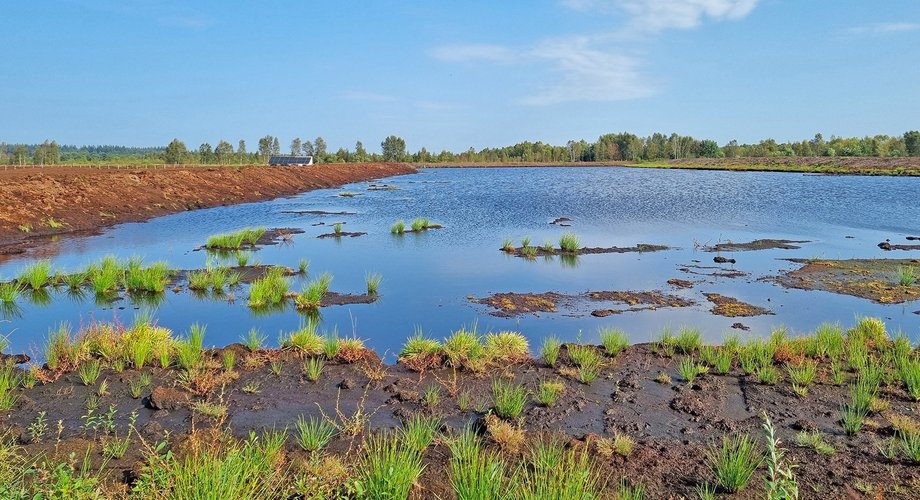
Together with NABU, we are currently realising the largest moorland conservation project in Germany: The Ahlenmoor near Cuxhaven is being developed into a growing climatic raised bog and will provide a home for countless endangered animal and plant species.
In the renaturalisation project of the NABU Climate Fund, initiated in 2022 by NABU e.V. and the REWE Group, small peat moss plants were recently scattered over a prepared area - the perfect basis for the moor to develop again after draining. While the mosses continue to grow upwards, they die off downwards in the absence of air. This creates new peat layer by layer, and with it a natural carbon store.
As a member of the "Alliance of Pioneers", toom Baumarkt DIY store is also committed to the rewetting of former moorland in order to revitalise destroyed ecosystems and promote moorland protection.
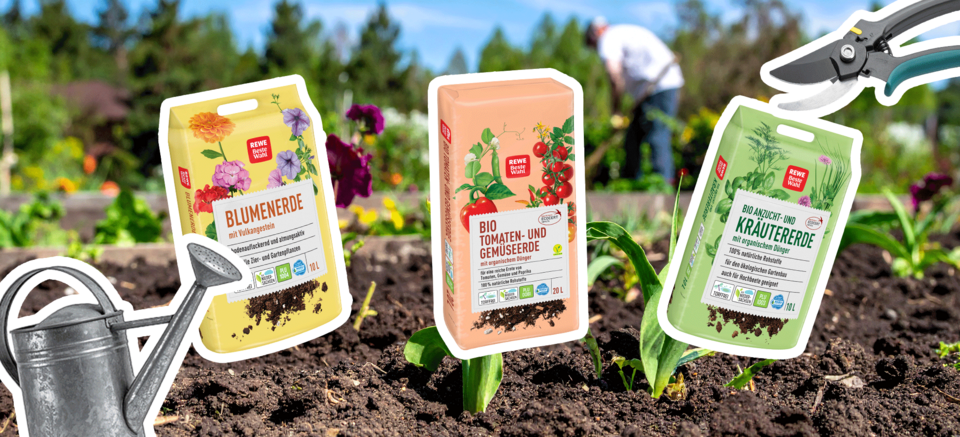
 In 2016, toom Baumarkt DIY store became the first DIY store chain in Germany to set itself the goal of converting its entire soil range to 100 per cent peat-free products. This ambitious goal was achieved in 2025. We are also 100% peat-free in the production of our soils at REWE and PENNY Germany.
The conversion of our soil range is just one part of our comprehensive commitment to sustainability and the protection of valuable ecosystems. toom Baumarkt DIY store played a key role in the development of the HORTICERT certification, which examines the ecological, social and economic sustainability aspects of peat substitutes. In addition, toom is involved in research and development. Together with the Nürtingen-Geislingen University of Applied Sciences, toom is supporting the project "Hobby gardening with peat-reduced and peat-free substrates". The aim is to develop practical solutions for hobby gardeners and to further increase the acceptance of peat-free products.
 Following the conversion of the soil range, toom is now working continuously to make plant cultivation more sustainable: Over 300 ornamental plants at toom Baumarkt DIY stores are already peat-free or peat-reduced.
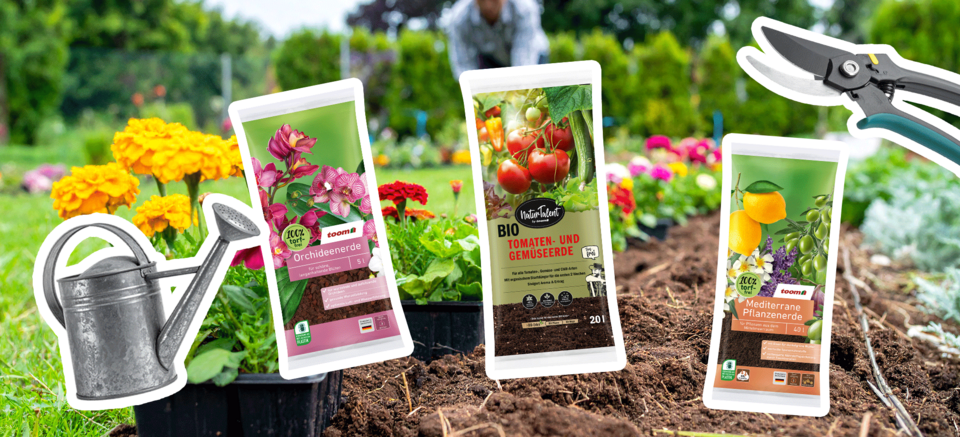
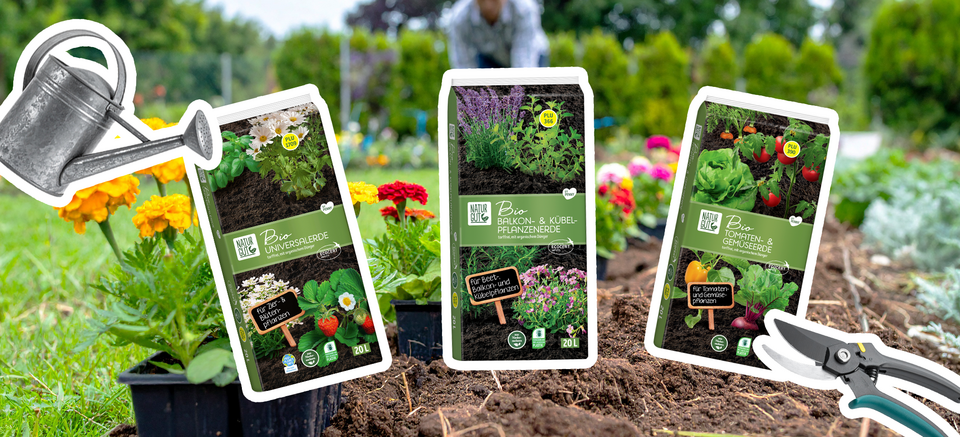
At PENNY, all Bio Naturgut soils contain 100% peat-free ingredients. PENNY's conventional potting soil has also been 100% peat-free nationally since 2025. This means that soils at PENNY also offer the best quality based on natural, sustainable raw materials.
To raise customer awareness of the importance of peat-free soil for climate protection, PENNY and toom are taking part in the "Peat-free gardening!" campaign week campaign week. The initiative was launched by the Federal Ministry of Food and Agriculture (BMEL). An alliance of retail companies, associations and environmental and nature conservation organisations is supporting the campaign. By participating in the campaign, REWE Group companies want to draw attention to the positive contribution to environmental and climate protection made by buying peat-free soil and communicate the relevance of the topic and the background to customers in an understandable way.
Eliminating peat is an important step towards protecting our climate and preserving biodiversity. As a retail company, we want to be a pioneer by promoting more sustainable product ranges, acting in an environmentally and climate-conscious manner and thus promoting a sustainable society.
- Use special soils: The respective soils are tailored to the needs of the respective plants.
- Fertilise regularly: The fertiliser provides the plants with enough nutrients. (Peat substitute is much more active in the rotting process. Nutrients are also used up in the process and must be replenished)
- Watering: Give small amounts of water more often. Use the peat test.
- Use fresh peat-free soil: Peat substitute is more microbially active than soil with peat.
Further helpful information and tips on peat-free gardening, such as correct watering and fertilising, can be found at toom.de.
In our current progress report, we show how we at REWE Group are implementing Sustainability - including our commitment to greater biodiversity (pages 25-26) - in an effective and practical way.
